Outdoor event stand: what it needs
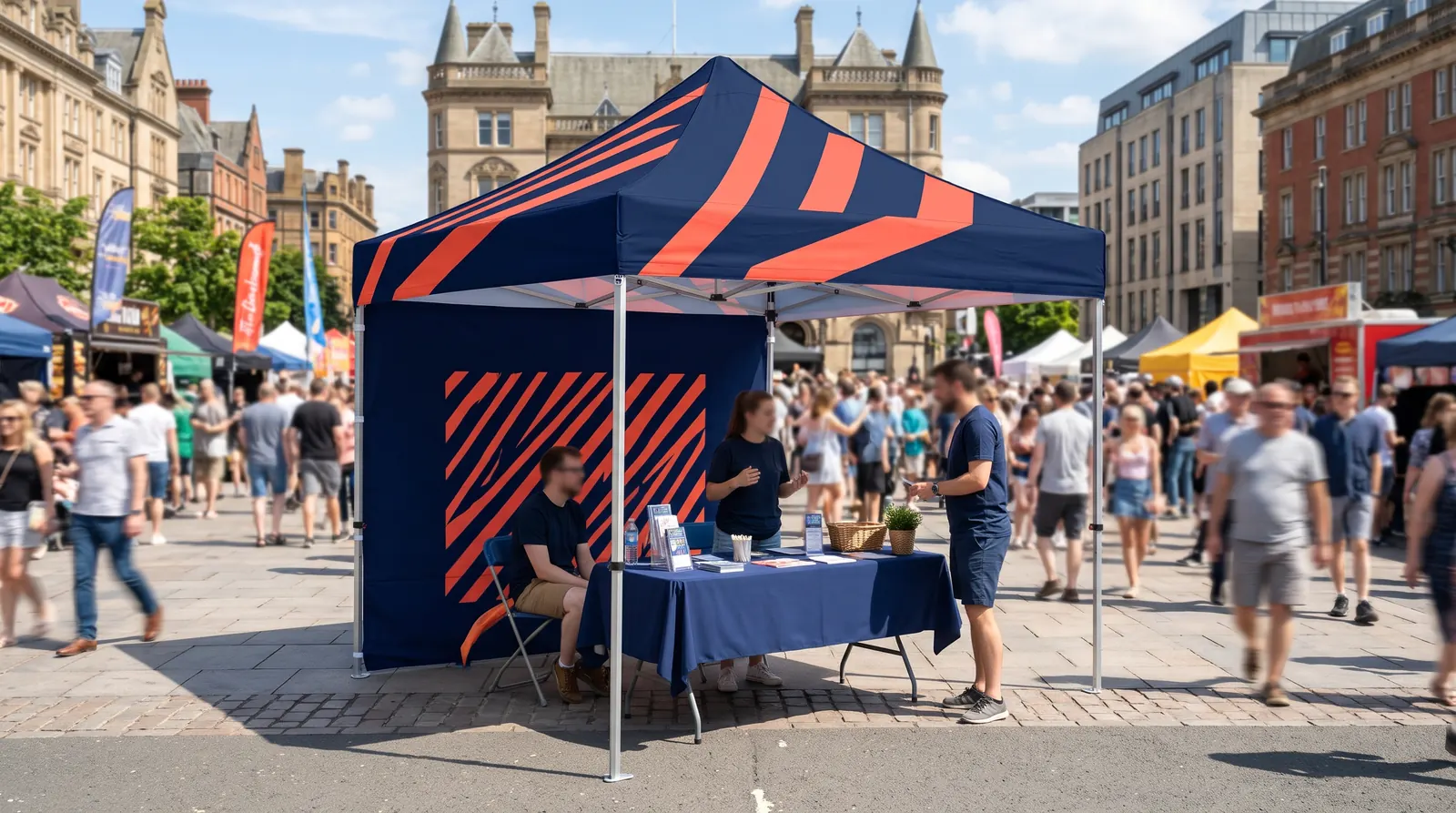
A good outdoor event stand works in four zones. Cover keeps people and stock out of the sun and rain. Branding makes you visible from the far side of the field. A service point lets you talk, sell and hand out material. A visitor area keeps people there for more than a few seconds.
At a fete, market or corporate family day, there is a fifth consideration: logistics. Everything has to fit in a vehicle, go up within an hour and stand safely on grass or paving all day. The checklist below covers both.
12 pieces of kit for an outdoor event stand
- Pop up gazebo — the base of the stand. The most versatile size is 3x3 m, for example the Everest aluminium frame, which weighs 18 kg in that size and comes in a wheeled bag. For a bigger pitch, choose 3x4.5 or 3x6 m.
- Roof in your brand colour — the gazebo roof canopy is ordered separately, in white, blue, red or black, in the size that matches the frame.
- Weights for every leg — 5 kg horseshoe weights, 14 litre water weights or sand bags. On paving they are the only thing holding the gazebo down.
- Back wall or half wall — it hides your storage area and gives you a branded backdrop. Hang a half wall or banner on a halfbar between the legs.
- Feather flags — two flags at the corners of the stand are visible above the heads of the crowd. For example, a PRO flagpole with a base to suit the ground: a cross base with a water bag on paving or a ground spike on grass. Flag printing is quoted separately.
- Flag on the gazebo — if the organiser does not allow flags outside your pitch, fix the pole to a leg with a gazebo-mounted flag base.
- A-board at the entrance — for today's offer, a price list or competition details. Outdoors, choose a model designed for outdoor use, such as the waterproof PRO wooden A-board with a 53x80 cm board.
- Counter — it marks the service point and hides spare stock. The Promo 1 counter has an oval top, measures 91x46x93 cm and comes with a carry bag.
- Table and tablecloth — the E180 event table has a 180x75 cm top, stands 74 cm high and weighs 12 kg. An E180 tablecloth or topper in brand colours turns it into part of the stand.
- Cocktail table — the tall C80 table, 110 cm high with an 80 cm top, gives you somewhere to chat standing up or run a tasting.
- Chairs and deckchairs — folding chairs for staff plus aluminium deckchairs or wooden ones in a chill-out area. Find out more in our guide to branded deckchairs.
- Chalkboard and leaflet stand — a chalkboard for prices or the timetable, and a leaflet stand under the roof so your print stays dry.
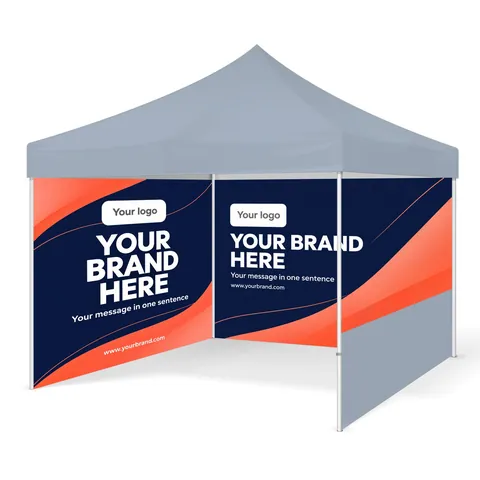
Everest aluminium gazebo frame — with wheeled bag
from €311.39 incl. VAT3 versions
In stock — ships in 1–2 business days
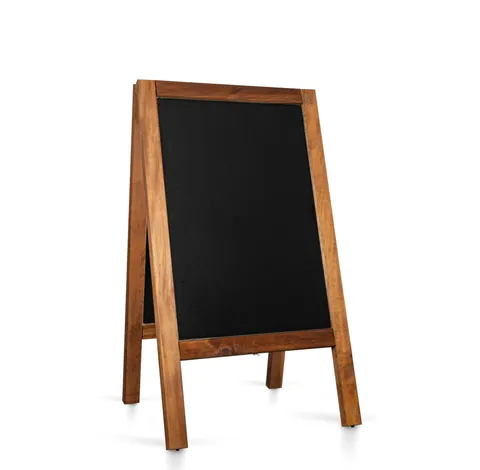
PRO wooden A-board 65x118 cm — waterproof
€137.37 incl. VATIn stock — ships in 1–2 business days
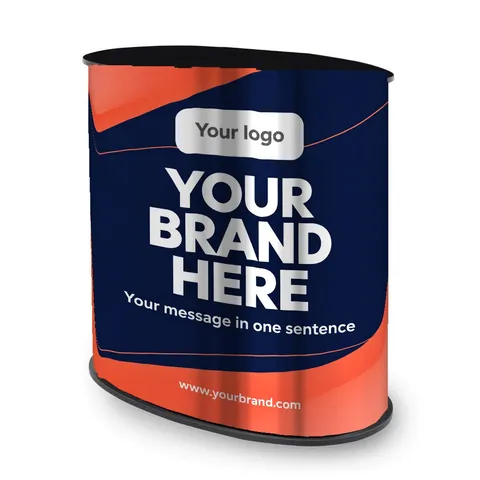
Counter Promo 1 with heavy-duty top
€153.94 incl. VATLead time on request
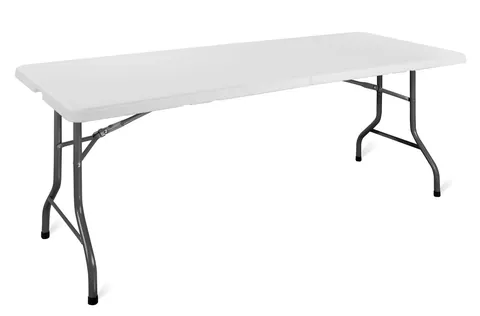
E180 event table
from €52.11 incl. VAT2 versions
In stock — ships in 1–2 business days
Stand layout: where everything goes
Start with the direction visitors will come from. The open side of the gazebo should face the main footfall, with the back towards a wall, fence or the neighbouring stall.
- Counter — at the front edge of the roof, with a gap at the side so visitors can step under cover.
- Flags — at the front corners, far enough away that a leaning pole cannot hit the roof or passers-by.
- A-board — two or three steps in front of the stand, in the eyeline of people walking past, without narrowing the walkway.
- Visitor area — deckchairs or a cocktail table to one side or in a second gazebo, so staff are not blocked.
- Back of house — boxes, water and spare material behind the back wall or under the counter.
Guy ropes run outside the roof line. Mark them with tape or small flags and never run them across a path, as fetes are full of children.
Fete, market or corporate family day: what is different
Fetes and town festivals
Big family crowds, lots of children and a full day outdoors. Stability, safe walkways and an attraction for families matter most: a competition, a game, a photo backdrop. We describe a full example kit with a budget in our example town festival stand.
Markets and trading stalls
Tight pitches, selling and taking payments. You need a counter or table, a clear price list, lighting for evening trading and space for stock. A white roof keeps the inside bright and looks clean around food.
Corporate family days and staff picnics
Guests are staff, clients or partners, and the goal is atmosphere. Chill-out areas with deckchairs, tables for a shared meal, several 3x3 m gazebos or one 3x6 m gazebo as a covered dining area and flags leading the way from the car park all work well.
Event day checklist
These small items do not sit in any shop category, but forgetting them can stop your set-up in its tracks:
- event rules, site plan, pitch number and vehicle access times;
- water for the water weights or sand for the bags, if not available on site;
- a rubber mallet, spare pegs, tape, cable ties and scissors;
- an extension lead and power strip, if the organiser provides electricity;
- a card terminal, power bank and change for the till;
- a lidded box for leaflets and plastic sheeting for your print in case of rain;
- bin bags, paper towels and a first aid kit;
- drinking water and sun cream for staff.
Weather: sun, rain and wind
In hot weather, a white roof with open sides gives the most airflow, while a dark roof heats up more. For rain, bring side walls and tension the roof so water runs off outwards, not onto your neighbour. Wind is the biggest risk: every gazebo leg must be weighted, and in strong gusts you remove walls and flags, then take the gazebo down. Details are in our guide to securing a gazebo in wind.
Transport and set-up order
Most outdoor stand equipment packs flat. The bag for a 3x3 m frame is 163 cm long, the E180 table comes in a 94x76x9 cm box, and folding chairs and deckchairs take up little room. Load the vehicle in reverse set-up order: gazebo and weights in last, so they come out first.
- Gazebo: frame, roof, weights and guy ropes.
- Walls and a banner on the halfbar.
- Counter, table and chairs under the roof.
- Flags, then the A-board in front of the stand.
- Final check: weights, ropes, walkways and rope markers.
If you are still choosing a gazebo, read our pop up gazebo buying guide.
Common outdoor stand mistakes
- Too many messages — from ten or fifteen metres away, nobody reads five slogans. A logo is enough on the flag and roof, and one sentence and one offer on the A-board.
- A counter across the whole entrance — it becomes a barrier visitors do not cross. Leave a way in under the roof or turn the counter sideways.
- Stock on the ground and in the rain — boxes on wet grass soak up water and leaflets on an open table blow away. Keep spares under the counter and in a lidded box.
- No weights because it is calm — outdoor weather can change within a quarter of an hour, so weights go on as soon as the frame is up.
- No pack-down plan — agree in advance who takes down the walls and flags when strong wind arrives, and where the kit goes at the end of the day.
How to order your outdoor stand equipment
You will find gazebos, roofs and weights in our pop up gazebos range, flagpoles and bases under flags and gazebos, A-boards under A-boards and tables, chairs and deckchairs under event furniture. In-stock products ship within 1–3 working days across the EU with a VAT invoice, and companies and agencies buy at B2B prices. You can ask us about printing your graphics in a quote request or have them printed by any print shop. We list the graphic size on every product page. If you are kitting out several stands at once, send us a quote request with your list.
Frequently asked questions
What size gazebo is best for a fete?
For most fetes a 3x3 m pop up gazebo is enough: it gives 9 m² of cover and fits standard pitches. If you transport it often, choose a lighter aluminium frame, which weighs 18 kg in that size. Add a roof in your brand colour and weights for every leg. For a food and drink area or a larger display, go for 3x4.5 or 3x6 m.
How do you make an outdoor stand visible from a distance?
Use height and colour. Feather flags at the corners of the stand show above the heads of the crowd, and a roof in your brand colour makes your gazebo stand out in a row of white ones. Put an A-board with one short message at the entrance. On a back wall or banner, place your logo near the top, as people and the counter hide the lower part.
Can an A-board be left out in the rain?
It depends on the model. Choose A-boards designed for outdoor use, such as the waterproof PRO wooden A-board. Our classic wooden A-boards are specified as not weather resistant, so keep them under the gazebo roof. Whatever the model, protect the poster from getting wet and bring the A-board under cover in strong wind.
What should I bring to a corporate family day besides a gazebo?
For a corporate family day, plan tables with tablecloths for a shared meal, tall cocktail tables, folding chairs and deckchairs for a chill-out area. Add flags to guide guests from the car park, an A-board with the day's programme and a chalkboard with the timetable. Remember weights for every gazebo, plus drinking water, bins and a first aid kit.
Do event organisers require gazebo weights?
They may. Outdoor event organisers can set out in their rules how gazebos must be secured, for example a required weight on every leg or a ban on driving pegs into the surface. Read the rules before the event and bring weights whatever they say. Choose the ballast according to the gazebo manufacturer's instructions and the organiser's requirements.