Why a pop up gazebo is so sensitive to wind
A pop up gazebo is a large roof on a light frame. A 3x3 m roof has 9 m² of fabric and a 3x6 m roof 18 m², while the frame weighs between 18 and 45 kg depending on size and material. Wind pushes against the fabric from the side, and when it gets under the roof it lifts it as well. The weight of the frame alone will not hold a gazebo down even in moderate gusts, so securing it is not an optional extra but part of the set-up.
Gusts are more dangerous than steady wind. A gazebo that has stood quietly for an hour can shift or lift in a single stronger gust. The result can be a damaged frame and, in a crowd, a risk to people. That is why you apply the rules below every time, even on a fine day.
Four rules that always apply
- Every leg weighted — no exceptions, and straight after the legs are raised, not once the wind starts.
- Guy ropes wherever possible — on grass and soil, peg and tension a rope from every corner.
- One person in charge of the gazebo — a member of staff watches the forecast and the organiser's announcements and decides when to remove walls or take the gazebo down.
- Manufacturer's instructions — the manufacturer states the operating conditions and required ballast; follow them and the event rules.
For the full set-up sequence, see our guide on how to put up a gazebo. Here we focus on keeping it in place.
Gazebo weights: types and how to choose
A leg weight holds the foot to the ground and is the only anchoring that works on every surface. We offer three types, and you can combine them on the same leg.
| Weight | Specification | Best for |
|---|---|---|
| 5 kg horseshoe weight | 5 kg, 3x21x25 cm | ready-made ballast straight from the car, flat and easy to place at the foot |
| Water-fillable leg weight | 14 l, 36x36x11 cm, 1 kg empty | venues with a water supply; light to transport and emptied after the event |
| Single sand bag / double sand bag | 0.10 / 0.35 kg empty | beaches and sites where sand is easy to get; packs down small afterwards |
How much weight one leg needs depends on the gazebo size, the walls, the surface and the location, so we do not give a single figure. Choose the ballast according to the manufacturer's instructions and the event rules, as outdoor event organisers may set a minimum. A filled 14 litre container adds about 14 kg of water and a horseshoe weight is a fixed 5 kg, so it is easy to work out how many you need per leg.
How to place the weights
A weight should sit low, at the foot, and be attached to the leg rather than just standing next to it. Use a similar weight on every leg so no corner is weaker than the others. Larger gazebos, 3x4.5 and 3x6 m, have a bigger roof and need proportionally more ballast than a 3x3 m.
Pegs and guy ropes: how to set them
The Everest aluminium and Blanc steel frames come with pegs and 3.3 m guy ropes: 4 of each with the 3x3 and 3x4.5 m versions and 6 of each with the 3x6 m version. Guy ropes work together with the weights and take up part of the force that tries to tip or lift the gazebo in a gust.
- Attachment — tie the rope to an upper corner of the frame and run it outwards, in line with the gazebo's diagonal.
- Angle — drive the peg in at an angle, leaning away from the gazebo, so the rope pulls across it rather than out of the ground.
- Tension — tension all ropes evenly; a slack rope only starts working after a jolt.
- Checks — rain and hours of wind soften the ground, so check the pegs and re-tension the ropes.
On block paving, tarmac and slabs, pegs will not go in. Weights are then your main anchoring, and you should only tie ropes to heavy objects if the organiser agrees. Pegs hold poorly in sand, so sand bags work better on a beach. Mark the ropes with tape or small flags, as people easily trip over them in a crowd.
Side walls and wind direction
Walls give shade and keep the rain off, but they increase the area the wind acts on. A fully enclosed gazebo behaves like a sail, and one with three walls and the open side facing the wind behaves like a parachute, because the wind gets under the roof and lifts it.
- If you use a single wall, put it on the side the wind is coming from, so the wind cannot get under the roof.
- Plan the entrance on the sheltered, downwind side.
- As the wind picks up, take the walls off first, before you even think about taking the gazebo down.
- A lighter alternative to a full wall is a half wall or banner on a 3 m halfbar.
Set the legs to a lower height too. A lower gazebo offers less resistance, and the frame joints work less.
When to take the gazebo down
We do not quote a wind speed at which a gazebo is safe, because that depends on the model, the anchoring and the site. The manufacturer gives the limits in its instructions. Take the gazebo down when:
- the legs lift despite the weights or the frame visibly moves;
- the roof flaps hard and the joints creak or flex;
- the forecast or weather warnings announce strong wind or a storm;
- the event organiser tells exhibitors to pack up.
Remove the walls first, then lower the legs and fold the frame with the full team. Never try to hold a gazebo down by hand in a gust. In a thunderstorm, leave the gazebo, as a metal frame is not shelter. Do not leave a gazebo up and unattended overnight unless the instructions and the event rules allow it.
Rain and water on the roof
Wind is not the only load. Water pools on a slack roof and can bend the frame. Keep the roof evenly tensioned and push pooled water off gently from underneath. In prolonged rain, you can set the legs on one side one notch lower so water runs off in one direction, away from the entrance and your neighbours. After the event, dry the roof before putting it in the bag.
Flags and extras on the gazebo
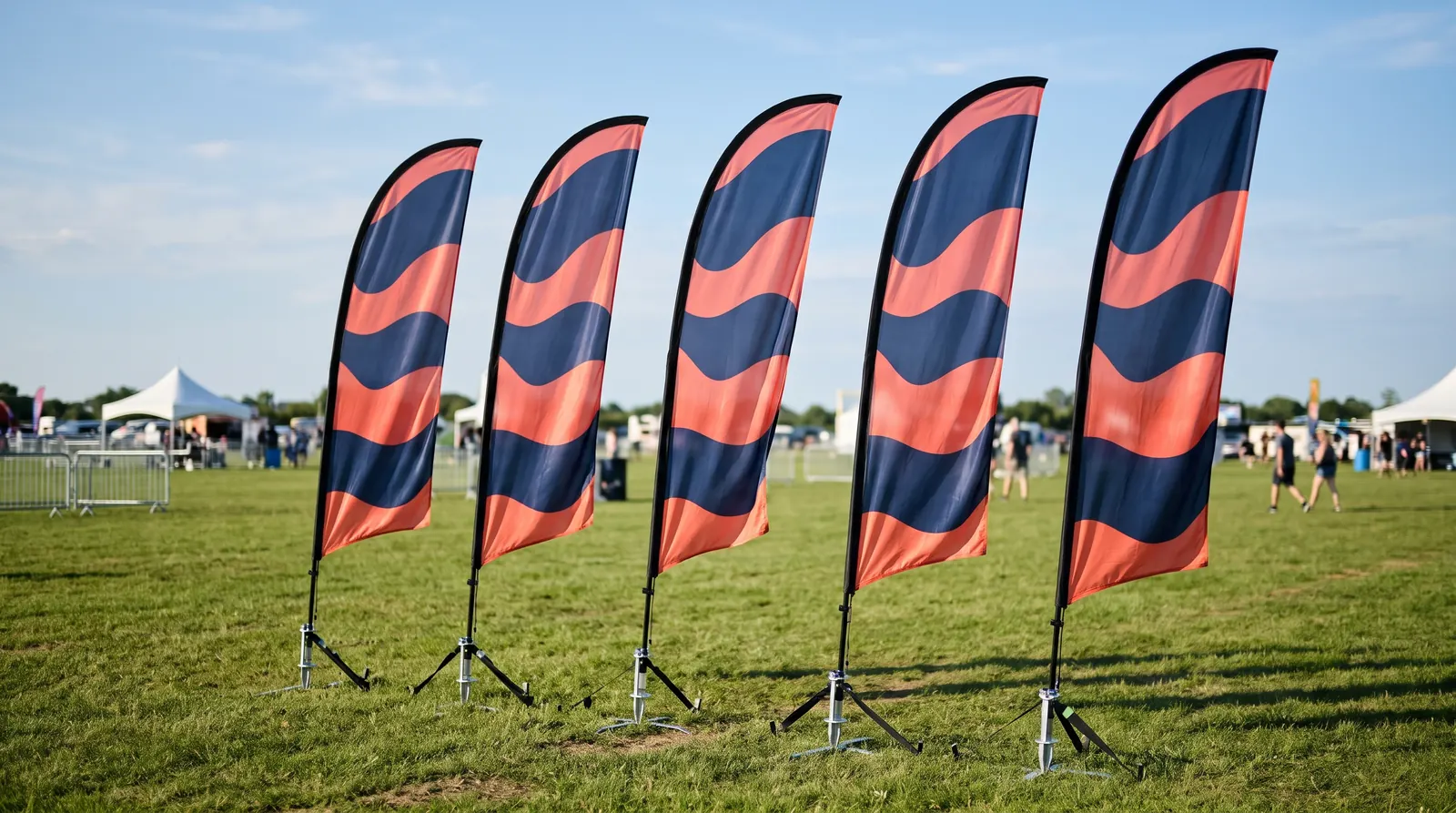
A feather flag fixed to a leg with a gazebo-mounted flag base adds extra force to that leg with every gust. That leg needs solid ballast, and in stronger wind you take the flag down along with the walls. Place flags on their own bases so that when they lean they cannot hit the roof or people. We cover securing them in more detail in our guide to feather flags in wind.
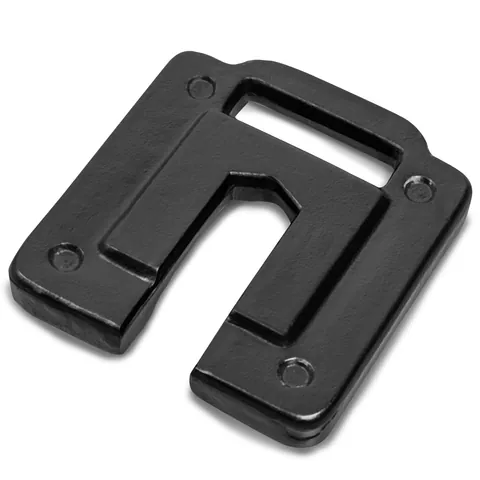
5 kg horseshoe gazebo leg weight
€37.39 incl. VATIn stock — ships in 1–2 business days
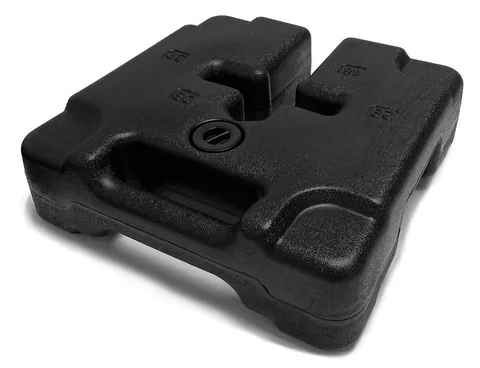
Water-fillable gazebo leg weight
€16.61 incl. VATIn stock — ships in 1–2 business days
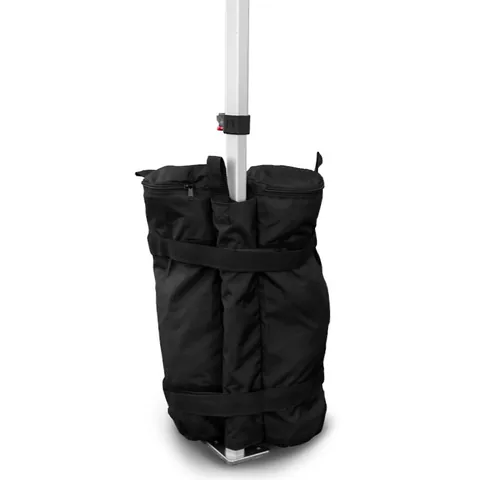
Double sand weight bag
€15.61 incl. VATIn stock — ships in 1–2 business days
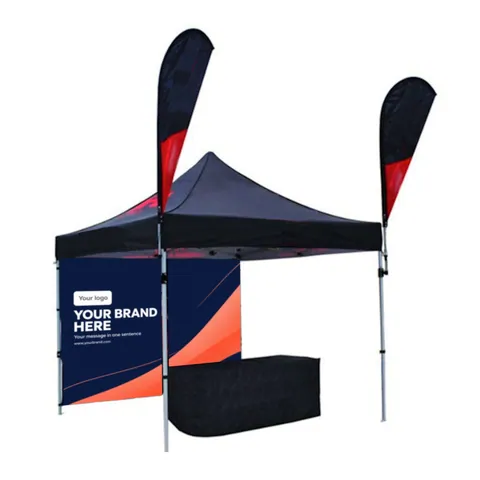
Gazebo-mounted flag base
€42.88 incl. VATLead time on request
Windy day checklist
Before you open the stand, walk round the gazebo and check a few things. Repeat the check every few hours and after every shower.
- Weights — they sit at the feet of all legs, water containers are full and sand bags are not leaking.
- Guy ropes — evenly tensioned, pegs firmly in the ground and ropes clearly marked.
- Locks — corner sliders and leg push buttons are all engaged.
- Roof — the fabric is taut, with no dips where water can collect.
- Walls and extras — you know who will remove them, and in what order, if the wind picks up.
- Surroundings — no loose boxes, leaflets or light items near the gazebo that a gust could blow into people.
Your wind kit: what to order
For every gazebo, order weights for all legs: horseshoe weights, water-fillable weights or sand bags, ideally with a few spare for difficult sites. You will find them under accessories and fixings, and frames and roofs in our pop up gazebos range. If you are still choosing a gazebo, read our pop up gazebo buying guide. In-stock products ship within 1–3 working days with a VAT invoice. If you are ordering several gazebos with full sets of weights, send us a quote request.
Frequently asked questions
How much weight does each gazebo leg need?
There is no single figure for every gazebo. The weight needed depends on the roof size, side walls, surface and location, and the manufacturer states it in its instructions. Check the event rules too, as the organiser may set a minimum. The maths is simple: a horseshoe weight is 5 kg and a filled 14 litre container adds about 14 kg of water. You can combine different weights on one leg.
Are the supplied pegs enough?
No. The pegs and guy ropes supplied with the frame work on grass and soil, but they do not replace leg weights. On paving and tarmac you cannot drive them in at all, and in sand or waterlogged ground they hold poorly. So you weight every leg every time and treat guy ropes as a second, supporting layer of anchoring. After rain, check the pegs and re-tension the ropes.
At what wind speed should you take a gazebo down?
The manufacturer sets the permitted conditions in its instructions, and you should follow them. In practice, take the gazebo down when the legs lift despite the weights, the frame moves, the roof flaps hard or the forecast warns of strong wind or a storm. Remove the walls first, then lower the legs and fold the frame with the whole team. Never hold a gazebo by hand in a gust.
Do side walls help or hurt in the wind?
Walls increase the area the wind acts on, so in stronger gusts they make things worse. The riskiest set-up is three closed walls with the open side facing the wind, because the wind gets under the roof and lifts it. Put a single wall on the windward side, plan the entrance on the sheltered side, and when the wind builds, take the walls off first.
How do you weight a gazebo on block paving?
On block paving, tarmac and slabs you cannot use pegs, so the weights do all the work. Fit a 5 kg horseshoe weight, a 14 litre water weight or a sand bag to every leg and combine them if needed. The weight should sit at the foot and be attached to the leg. Only tie guy ropes to heavy objects if the organiser allows it.