Standard poster sizes in one chart
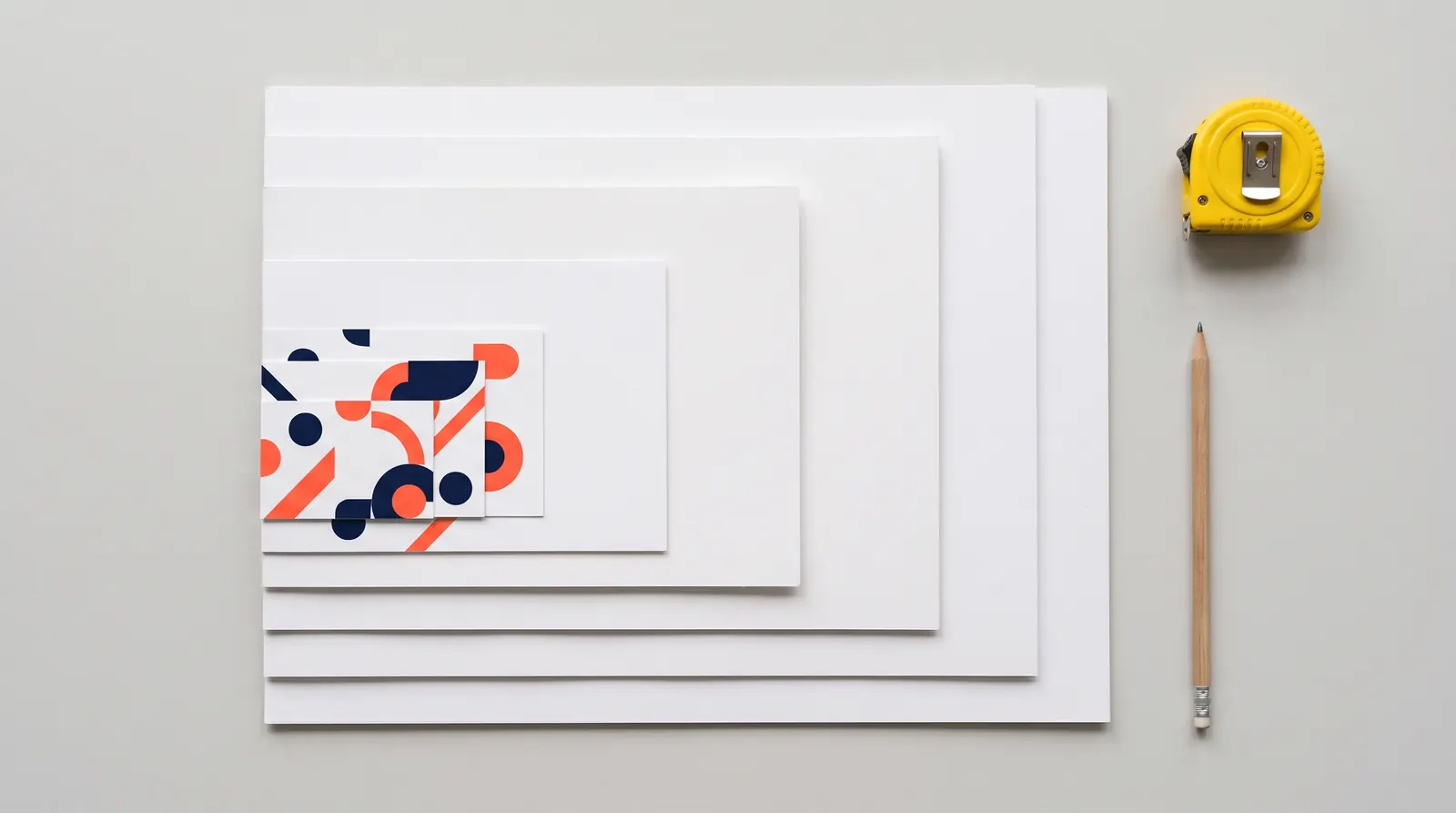
Most poster sizes come from the two ISO 216 series, A and B. In the UK and Ireland A sizes dominate: they are what printers stock and what most frames and A-boards are built for. B sizes are the traditional choice for concert, theatre and cinema posters across much of continental Europe.
| Size | cm | Inches | Where it works |
|---|---|---|---|
| B0 | 100 × 141.4 | 39.4 × 55.7 | hall, gallery, exhibition |
| A0 | 84.1 × 118.9 | 33.1 × 46.8 | large poster, exhibition graphic, busy entrance |
| B1 | 70.7 × 100 | 27.8 × 39.4 | event poster, noticeboard, large A-board |
| A1 | 59.4 × 84.1 | 23.4 × 33.1 | shop window, pavement sign, information board |
| B2 | 50 × 70.7 | 19.7 × 27.8 | venue, shop window, display case |
| A2 | 42 × 59.4 | 16.5 × 23.4 | lobby, corridor, information stand |
| A3 | 29.7 × 42 | 11.7 × 16.5 | notice, price list, door poster |
| A4 | 21 × 29.7 | 8.3 × 11.7 | information sheet, terms, instructions |
Detailed charts in millimetres, inches and pixels are in our guides to A0, A1, A2, A3 and A4 sizes and B0, B1 and B2 sizes.
A2 poster size and where to use it
An A2 poster is 42 × 59.4 cm (420 × 594 mm, or 16.5 × 23.4 in). It is half of A1 and twice A3. A2 works wherever people stand two or three metres away: in a lobby, by reception, in an office corridor or on a stand outside a meeting room.
At 300 dpi an A2 file is 4961 × 7016 px, and at 150 dpi 2480 × 3508 px. For most A2 posters seen from a few paces, 150–200 dpi is enough.
Watch the rounding: A2 is 42 × 59.4 cm, not 40 × 60 or 42 × 60 cm. A “40 × 60” print will not fill an A2 frame, and a “42 × 60” print will not slide under its profile.
UK, US and other popular poster sizes
Poster shops, frame suppliers and film distributors also use sizes outside ISO 216. Some are rounded B sizes, others are traditional British or American formats measured in inches.
| Name | Inches | cm | Typical use |
|---|---|---|---|
| Double Crown (UK) | 20 × 30 | 50.8 × 76.2 | traditional UK event and theatre poster |
| Quad Crown (UK) | 30 × 40, landscape | 76.2 × 101.6 | UK cinema “quad” poster |
| One Sheet (US) | 27 × 40 | 68.6 × 101.6 | American film poster |
| Large US poster | 24 × 36 | 61 × 91.4 | decorative and retail poster |
| Medium US poster | 18 × 24 | 45.7 × 61 | decorative poster, notice |
| Continental round sizes | — | 50 × 70 and 70 × 100 | interior posters; close to B2 and B1 |
| 40 × 60 cm | — | 40 × 60 | 2 : 3 photo format, magnetic frames |
Before you order a frame, check whether your poster is an ISO size or a rounded one. A B1 frame is designed for a 707 × 1000 mm print, so with a 70 × 100 cm poster compare both figures first.
How to choose a poster size for the space
Three things decide the size: how far away people are, how much you need to say and how much wall or window you have. Use this table as a starting point for a poster with a short message.
| Reading distance | Headline height | Poster size |
|---|---|---|
| up to 1 m | about 1 cm | A4, A3 |
| 2 m | about 2 cm | A3, A2 |
| 3 m | about 2.5 cm | A2, B2 |
| 5 m | about 4 cm | A1, B1 |
| 8 m | about 7 cm | A0, B0 |
- Distance — the table follows the sign makers’ rule of thumb of about 2.5 cm of capital letter height per 3 m. A window poster read from 5–6 m across the pavement needs a 4–5 cm headline, which in practice means A1 or B1.
- Amount of content — a single message and a logo fit on A2. An event programme with dates, times and a map needs A1 or B1.
- Hanging height — put the centre of the poster at eye level, usually around 150–160 cm from the floor. Hung too high, the bottom of the poster becomes hard to read.
- Orientation — portrait suits walls, columns and A-boards. Landscape suits wide shop windows and the space above a counter.
- Consistency — if you run the same campaigns across several branches, stick to one size. You prepare the artwork once and the frames fit everywhere.
How to display a poster: frames, hangers and stands
The poster size also tells you which display hardware you need:
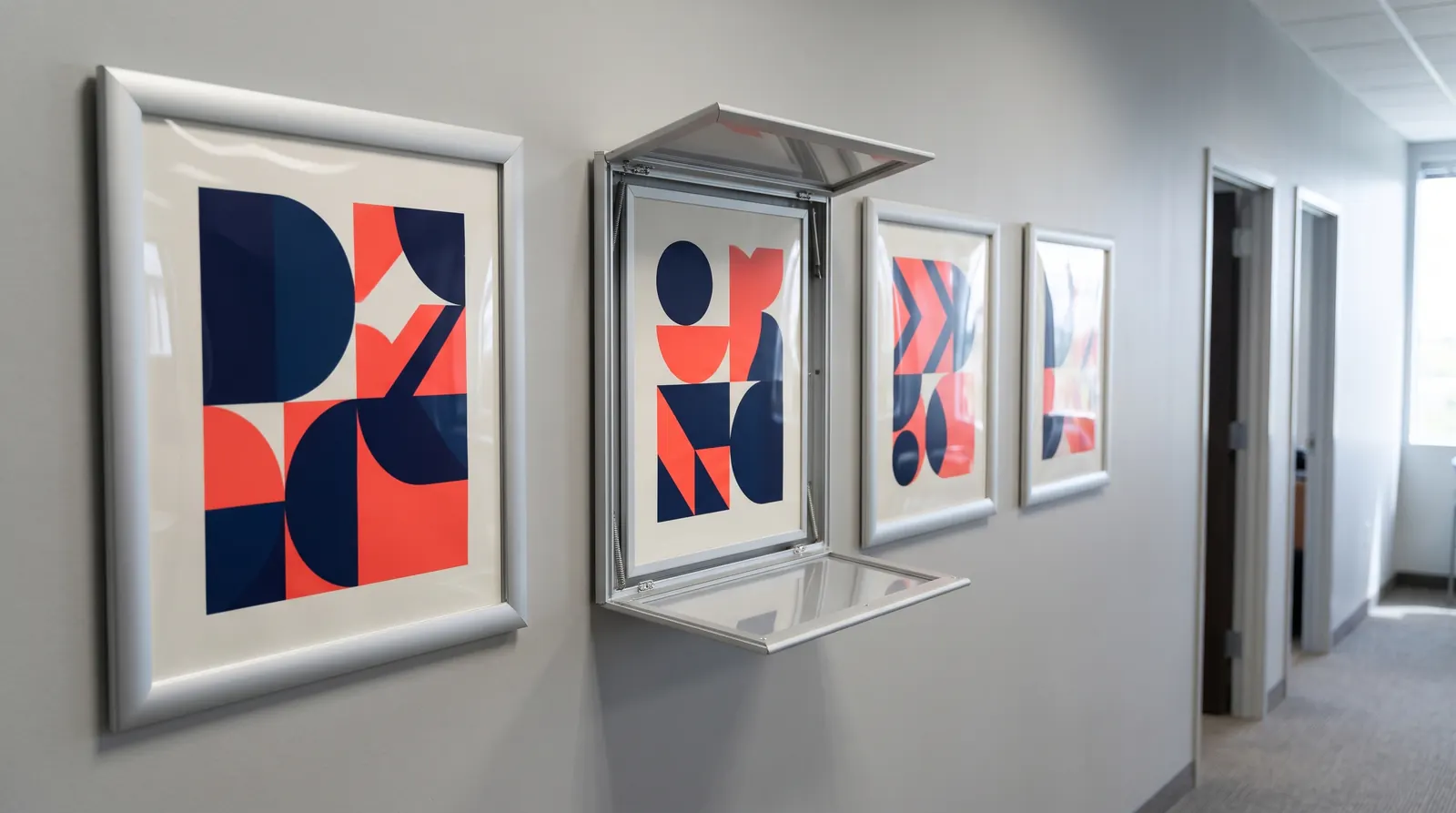
- Wall snap frame — the Standard snap frame in A5 to A0 and B3 to B1. You change the poster from the front without taking the frame down.
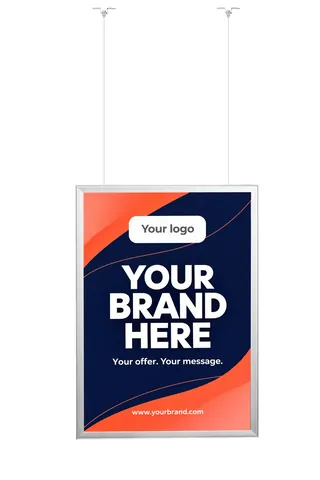
- Hanging frame — the Vertico hanging snap frame in A2, A1, B2 and B1, suspended on a 150 cm cable, for example in a shop window.
- Frame for a 40 × 60 cm poster — the Magnetic reverse frame has a 400 × 600 mm version (outer size 428 × 628 mm), as well as A4 and A3.
- Poster hangers — the Standard poster hanging bars and Slim poster hanging bars come in lengths from 40 to 200 cm. Match the length to the print width: for an A1 portrait poster (59.4 cm) the closest is the 60 cm bar, for A0 (84.1 cm) the 85 cm bar.
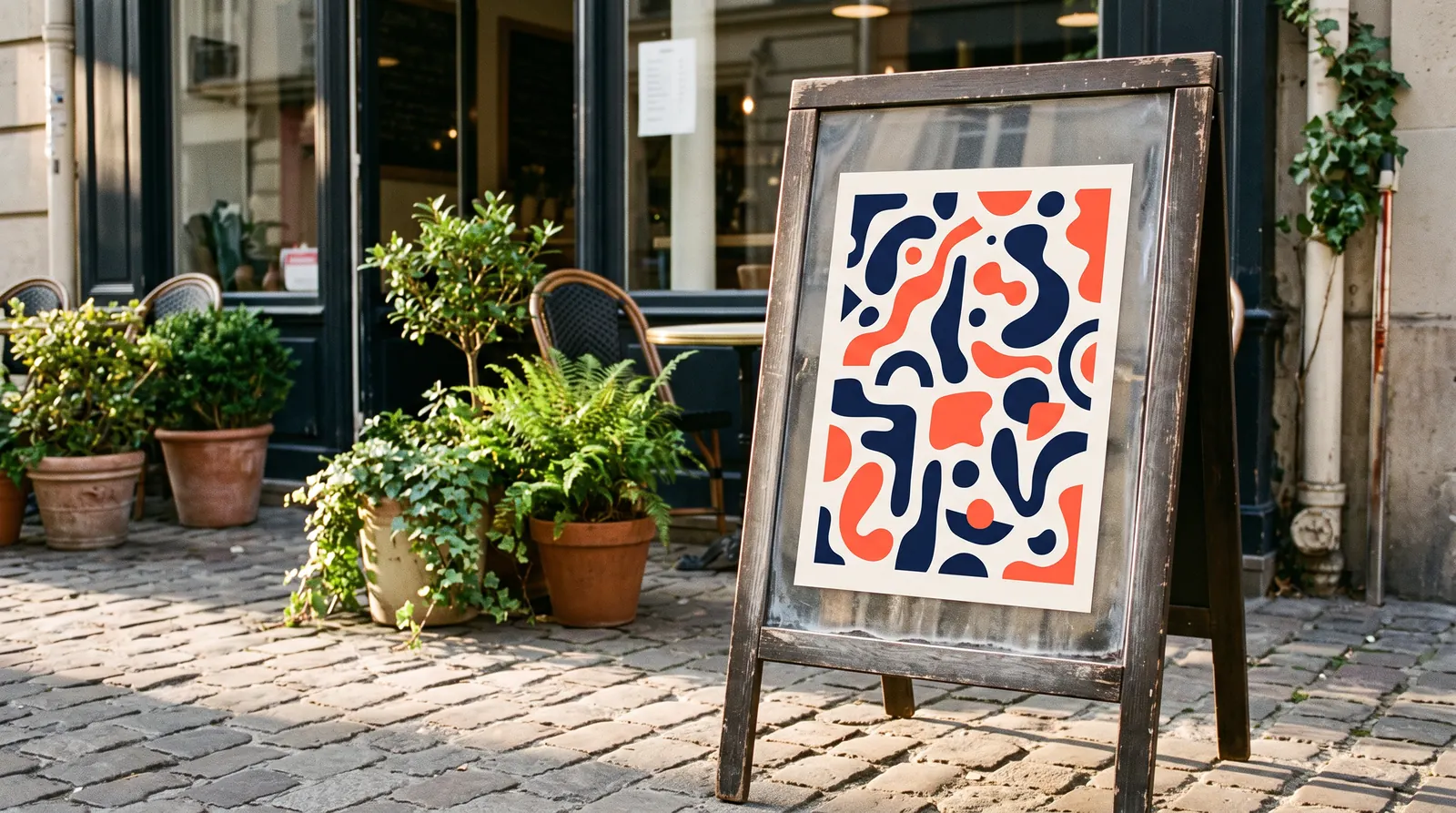
- A-board — the Aurora A-board in A2, A1, A0 and B2 puts a poster out on the pavement.
- Indoor stand — the Premium menu and information stand takes A2, A3 or A4. For a poster on a lightweight frame there is also the Standard X-banner in 60 × 160, 80 × 180 and 120 × 210 cm.

Snap frame Standard – poster frame A5–A0, B3–B1
from €7.43 incl. VAT16 versions
In stock — ships in 1–2 business days
Hanging snap frame Vertico – A2, A1, B2, B1
from €60.82 incl. VAT4 versions
In stock — ships in 1–2 business days
Poster hanging bars Standard
from €6.62 incl. VAT13 versions
In stock — ships in 1–2 business days
- Before Black Week

A-board Aurora – A2, A1, A0, B2
from €52.09€57.87incl. VATLowest price in the 30 days before the discount: €57.876 versions
In stock — ships in 1–2 business days
If you cannot decide between a snap frame and a clip frame with glass, see our comparison snap frame or clip frame.
How to prepare a poster file for print
- Net size — set the document to the exact poster size, for example 420 × 594 mm for A2.
- Bleed — add it if your printer asks; it is usually 2–3 mm on each side.
- Safe zone — keep text and logos at least 2–3 cm from the edges, because frame and A-board profiles cover the edge of the print.
- Resolution — 300 dpi for posters seen up close, 150 dpi for large sizes read from several metres.
- Colour and file type — a CMYK PDF with fonts embedded or outlined and the logo as a vector.
You can ask us about printing your graphic in a quote request or have it printed by any print shop. Every product page lists the graphic size.
How to order frames, hangers or stands for posters
Choose your display under poster frames, poster hangers or display and information stands. Items in stock ship within 1–3 working days across the EU, with a VAT invoice. Businesses, agencies and wholesale buyers get B2B prices with a business account.
Fitting out several shops or an office over several floors? Tell us which poster sizes you plan to use in a quote request and we will match the frames and prepare a price.
Frequently asked questions
What is the standard poster size?
There is no single standard, but most posters follow ISO 216. In the UK, advertising and signage mostly use A1 (59.4 × 84.1 cm) and A2 (42 × 59.4 cm), with A3 for smaller notices. In continental Europe, cultural posters are often B1 (70.7 × 100 cm) or B2 (50 × 70.7 cm). In the US the usual sizes are 24 × 36 in and 18 × 24 in.
What size is an A2 poster?
An A2 poster is 42 × 59.4 cm, which is 420 × 594 mm or about 16.5 × 23.4 inches. It is half of A1 and twice A3. At 300 dpi the file is 4961 × 7016 pixels, and at 150 dpi 2480 × 3508 pixels. A2 works well in lobbies, by reception desks and on information stands where people stand two or three metres away.
What poster size works best in a shop window?
For a window read from the pavement, A1 (59.4 × 84.1 cm) or B1 (70.7 × 100 cm) is the usual choice. Passers-by look from three to six metres away, so the headline needs to be several centimetres tall and the copy short. Smaller A2 and A3 posters only work in a window if customers come right up to the glass.
Will a 70 × 100 cm poster fit a B1 frame?
ISO B1 is 70.7 × 100 cm, so a 70 × 100 cm print is 7 mm narrower. Snap frame profiles do cover the edge of the poster, but whether a narrower print is held securely without showing the backing depends on the frame design. Compare your print size with the graphic size on the product page before ordering, or have the poster printed at exact B1.
How do I convert poster sizes from inches to centimetres?
One inch is 2.54 cm, so multiply each side in inches by 2.54. A 24 × 36 in poster is 61 × 91.4 cm, and 18 × 24 in is 45.7 × 61 cm. These sizes do not match A or B frames, so with American posters decide whether you need a custom-size frame or whether it is simpler to reprint the artwork at A1 or B1.