How to clean a roller banner and other displays: four ground rules
Roller banners, display walls, flags and gazebos are made from similar materials: aluminium or steel, plastics and printed film or fabric. So the same four rules protect all of them:
- Nothing wet goes in the bag — moisture trapped in a bag or base is the quickest route to stains, odours and mould.
- Gentle cleaners only — water with a drop of mild washing-up liquid and a soft microfibre cloth. No solvents, bleach, pastes or abrasive sponges, which dull the print.
- A dry, cool place — storage without big temperature swings, away from radiators and sunny windows.
- A check after every outing — five minutes of checking at the office beats a missing part in the hall an hour before opening.
Below you will find specific advice for each type of display. Where your printer or the stand's instructions say otherwise, follow those first.
Roller banners: cleaning and storage
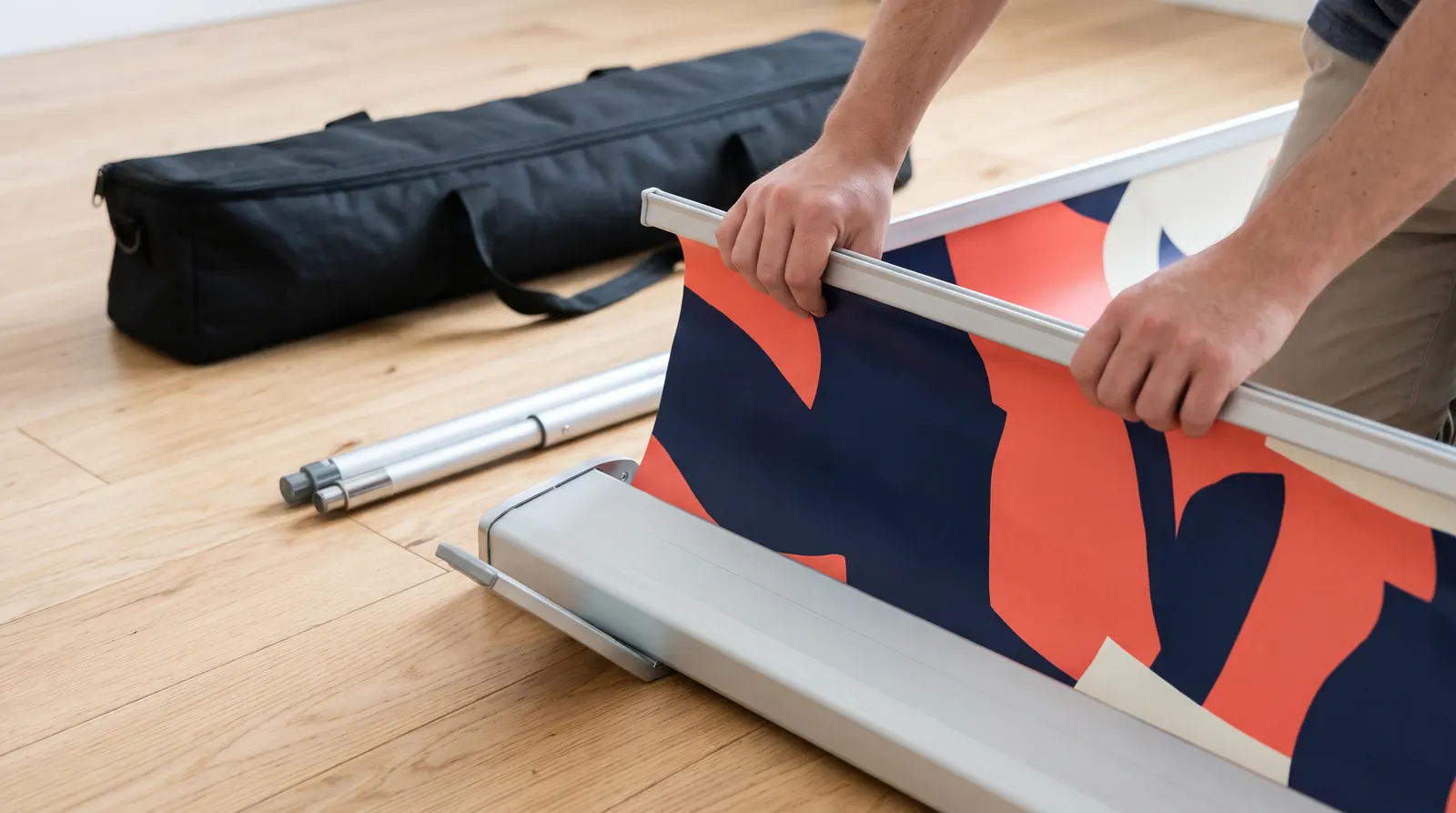
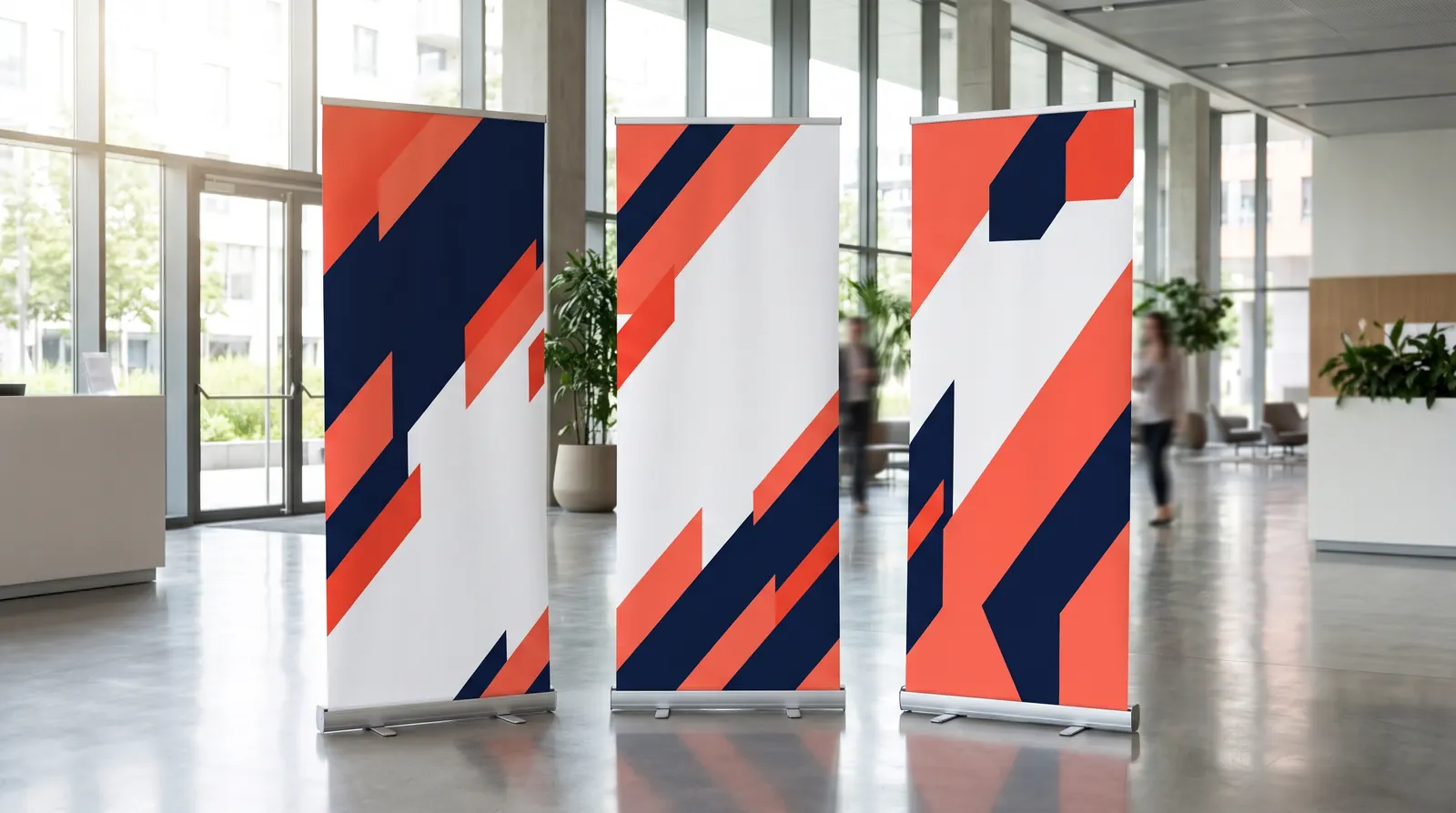
- Clean the graphic with the banner up — that way it is taut and flat. Wipe it lightly with a damp cloth from top to bottom, without scrubbing. Treat marks locally rather than washing the whole surface.
- Dry it before rolling up — after wiping, leave the banner up until the graphic is completely dry. A damp print rolled into the base can stick or transfer ink onto its own back.
- Look after the slot in the base — sand and crumbs in the slot scratch the graphic every time it rolls. Wipe the base and blow out the slot before packing.
- Check the pole — every section should push fully home, with no play or dents. Never force a bent pole straight.
- Store it flat, in its bag — do not stack heavy items on the bag, and do not lean the banner upright against a wall for weeks, as it can topple.
- Avoid constant sunlight — a banner standing for months in a south-facing window fades faster. If it is a permanent display, choose a spot out of direct sun.
We explain how to roll the graphic away properly in how to set up and take down a roller banner. New stands, such as the Standard roller banner, are in our roller banners category.
Pop up stands and fabric displays
- Fabric graphics — remove dust with a soft brush or a vacuum cleaner on a gentle nozzle. Treat stains locally. Only wash the fabric if the printer who made it says you can, and follow their instructions.
- Creases — roll the fabric loosely instead of folding it into a square. Small creases usually drop out once the graphic is stretched over the frame, for example on the Atlantis straight display wall. Do not iron the print without checking with the printer.
- Pop up panels — roll them loosely, never fold them, and keep them in the case the stand came in, such as the straight POP UP display with case. A creased panel leaves a visible line.
- Scissor frame — open and close it gently and evenly on all sides. If something resists, check that no joint has jammed.
- Bars and magnetic tape — count the bars after every build. Lost parts and magnetic tape for pop up stands are available under accessories.
Feather flags and flag poles
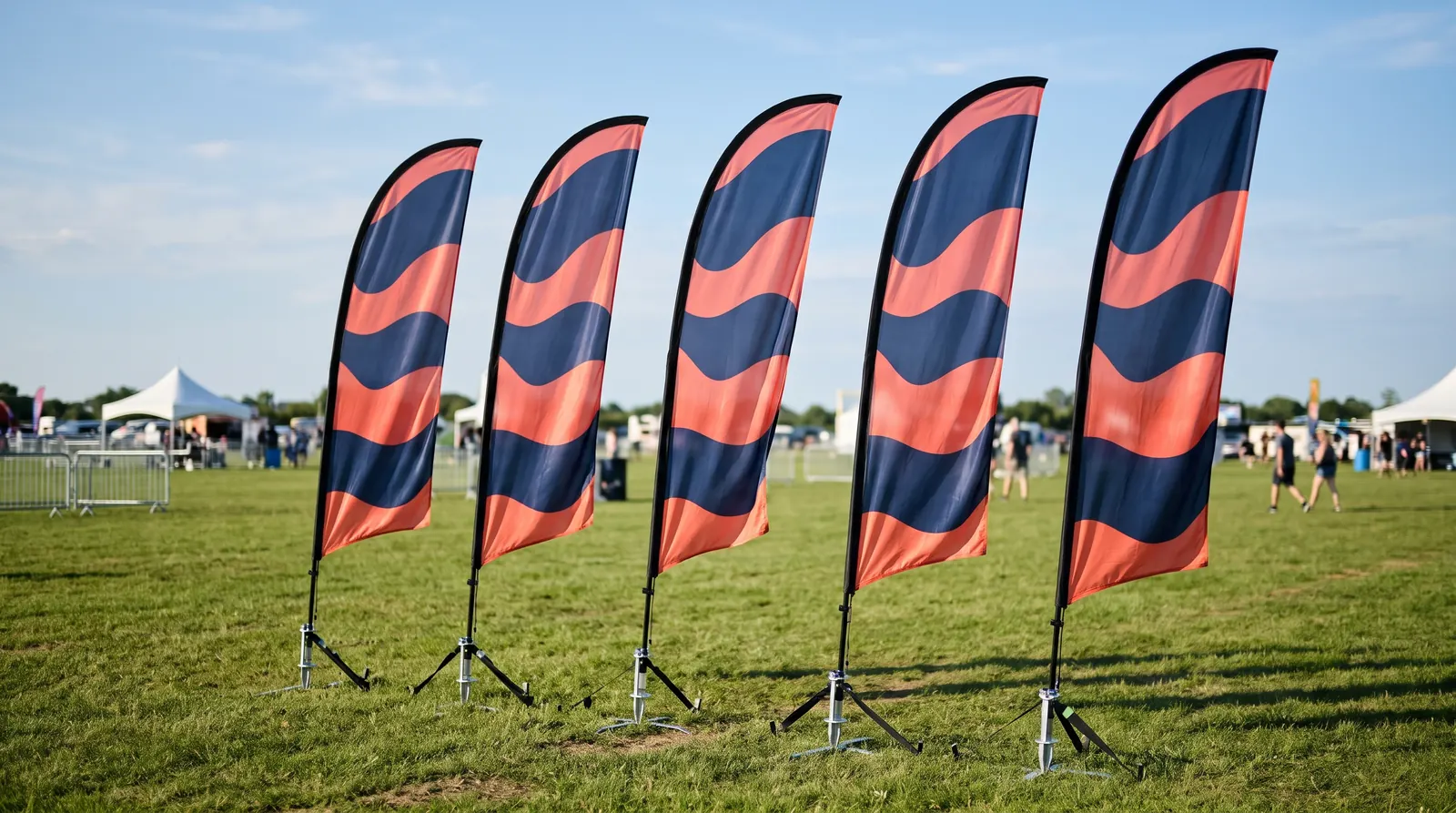
- Dry the flag before packing — after rain, hang it in the shade and pack it only once it is dry.
- Wash gently — if the printer allows washing, do it by hand or on a delicate cycle, at a low temperature and without bleach. Do not wring the flag or dry it on a radiator.
- Keep pole sections clean — sand in the joints makes them hard to assemble and wears them down. Wipe the sections before bagging them and check the flexible tip, which on many poles is made of fibreglass.
- A bag for pole and flag — store the kit in a bag such as the Premium flag bag. A folded PRO flagpole measures 93 to 116 cm, depending on the variant.
- Bases — empty water-filled bases at the end of the season and before frost, as freezing water can damage them. Keep metal plates somewhere dry so they do not rust.
We explain how to assemble a flag and fit it to the pole in how to put up a feather flag. Poles, bases and bags are in our flags and tents category.
Pop up gazebos
- Never leave a wet canopy in the bag — if you have to pack up in the rain, open the canopy out to dry as soon as possible, ideally the same or the next day. The same goes for side walls.
- Cleaning the canopy — clean the 600D polyester gazebo roof with a soft brush and water with a mild detergent. Do not use a pressure washer or abrasive cleaners.
- The frame — clear sand and mud from the joints and sliders before folding it. Dry a steel frame thoroughly, and check an aluminium frame, such as the Everest, for dents and loose parts.
- Pegs, guy ropes and weights — count pegs and ropes after every event. Empty water-filled leg weights before storage.
- The wheeled bag — keep the frame in the bag it came in. It makes transport easier and protects the joints from knocks.
Putting up and taking down a gazebo correctly is covered in how to put up a pop up gazebo. Frames, canopies and weights are in our promotional tents category.
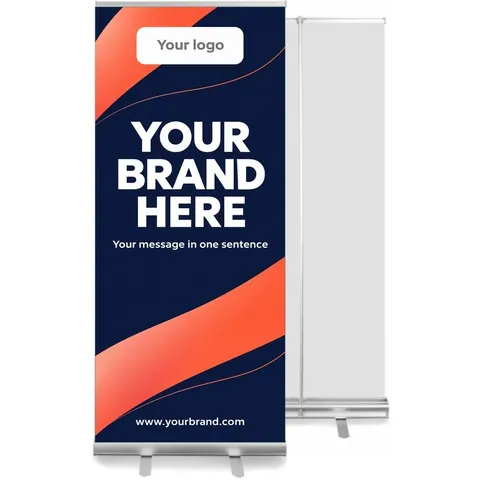
Standard roller banner – pull up stand 85–150 cm
from €26.98 incl. VAT6 versions
In stock — ships in 1–2 business days

Atlantis straight display wall
from €145.66 incl. VAT4 versions
In stock — ships in 1–2 business days
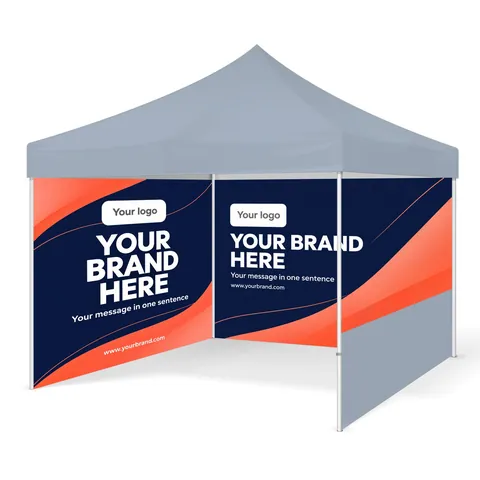
Everest aluminium gazebo frame — with wheeled bag
from €311.39 incl. VAT3 versions
In stock — ships in 1–2 business days
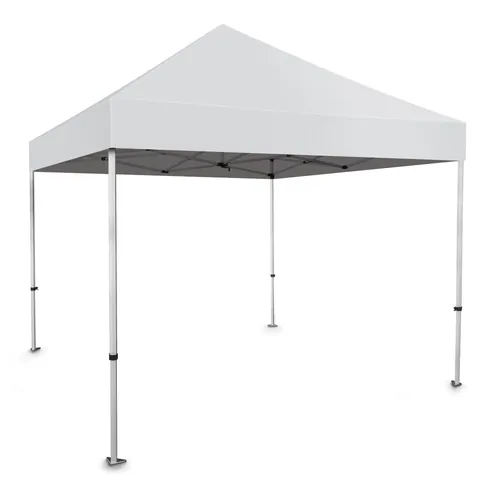
Gazebo frame roof fabric
from €70.51 incl. VAT12 versions
In stock — ships in 1–2 business days
Counters, LED displays and lights
- Promotional counters — wipe the top with a damp cloth and treat the front graphic like any other print: no abrasives and no sharp folds.
- LED walls and light boxes — always disconnect the power before cleaning. Dust the profiles with a dry cloth, and store the power supply and cables somewhere dry, loosely coiled without sharp bends.
- Lights for banners and walls — after switching off, wait for the fitting to cool, especially a halogen one, before putting it in the bag.
Transport and storage
A lot of damage happens not at the event but on the road and in storage. A few simple habits go a long way:
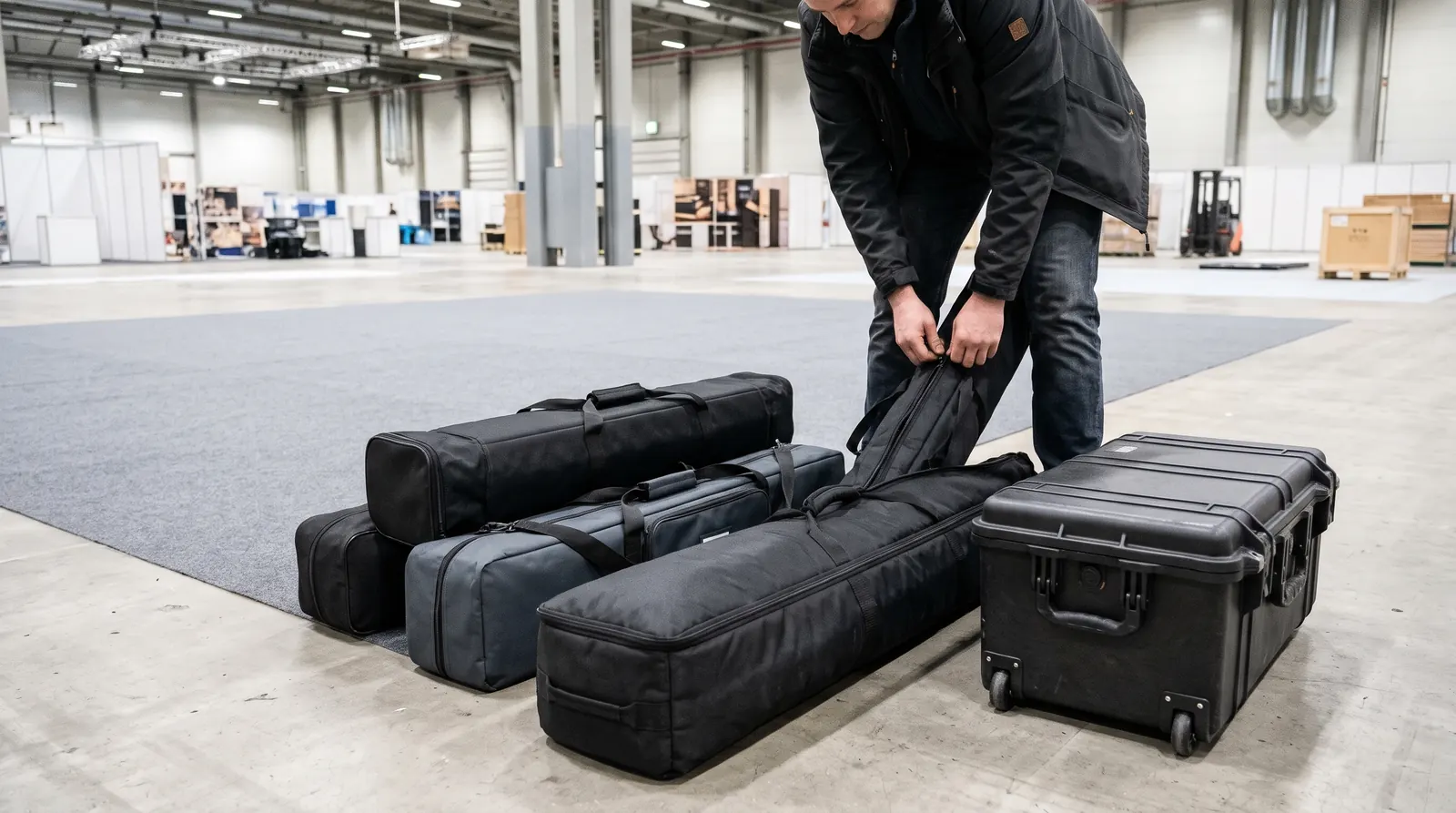
- Every display in its own bag or case — for several items at once, the S exhibition case at 134x43x27 cm or another of our transport cases helps.
- Heavy at the bottom, delicate on top — in the van, lay banner bases and frames flat, with graphics and lights on top.
- Labelled bags — a label with the display name, size and number of parts saves searching and packing mistakes.
- Shelves, not the floor — in storage, keep kit on shelving, away from damp walls and radiators.
Read more about packing several displays and planning transport in transporting and storing display systems.
After-event checklist
- Graphics are dry and clean, with no new marks or creases.
- Banner and flag poles have all their sections.
- Roller banner bases have no cracks and the graphic rolls evenly.
- Pop up bars and magnetic tape are all accounted for.
- The gazebo canopy and walls are dry or opened out to dry.
- Pegs, ropes and weights are complete and water bases emptied.
- Bags and cases have no broken zips or wheels.
- Anything to repair or reorder before the next event is written down.
When to replace a part and when to replace the display
Often one part is enough. A damaged graphic usually just needs a new print: you can ask us about printing in a quote request or use any print shop, and the graphic size is listed on every product page. A cracked flag pole, a gazebo canopy or pop up bars can be bought separately.
A new display makes sense when the load-bearing structure is damaged: a roller banner mechanism that has lost its tension, a cracked wall frame or bent gazebo legs. Repairs rarely pay off then, and the kit may fail at the worst possible moment.
What next
Missing a part or a bag, or want to refresh your whole fleet before the season? Browse roller banners, display walls and flags and tents. In-stock items ship within 1–3 working days with a VAT invoice. For larger top-up orders, send a quote request.
Frequently asked questions
How do you clean a roller banner graphic?
Set the banner up so the graphic is taut, then wipe it with a soft microfibre cloth dampened with water and a drop of mild washing-up liquid. Work from top to bottom without scrubbing, and treat marks locally. Do not use solvents, bleach or abrasive sponges. Only roll the graphic back into the base once it is completely dry.
Can you wash a feather flag?
Many fabric flags can be washed, but always check the instructions from the printer who made yours. The safest approach is hand washing or a delicate cycle at a low temperature, with no bleach and no high-speed spin. Do not wring the flag; hang it to dry in the shade and only pack it once it is completely dry.
What if you have to pack a gazebo away wet?
Pack it if you have no choice, but open the canopy and walls out to dry as soon as possible, ideally the same or the next day. Hang the fabric somewhere airy or put the whole gazebo up. Wipe the frame dry, especially a steel one. Leaving a wet canopy in its bag for long risks stains, odours and mould.
How should you store a roller banner over winter?
Before putting it away, check that the graphic is clean and dry and the pole complete. Put the banner in its bag and lay it flat on a shelf in a dry, heated room, away from radiators. Do not keep it in an unheated garage or a car, as damp and frost are bad for the print. Set it up once as a test before the first event.
How do you remove creases from a fabric graphic?
Small creases usually disappear once the graphic is stretched over the wall frame and left up for a few hours. To avoid them, roll the fabric loosely rather than folding it. Only iron or steam the print if the printer allows it, and always on the reverse side at a low temperature.