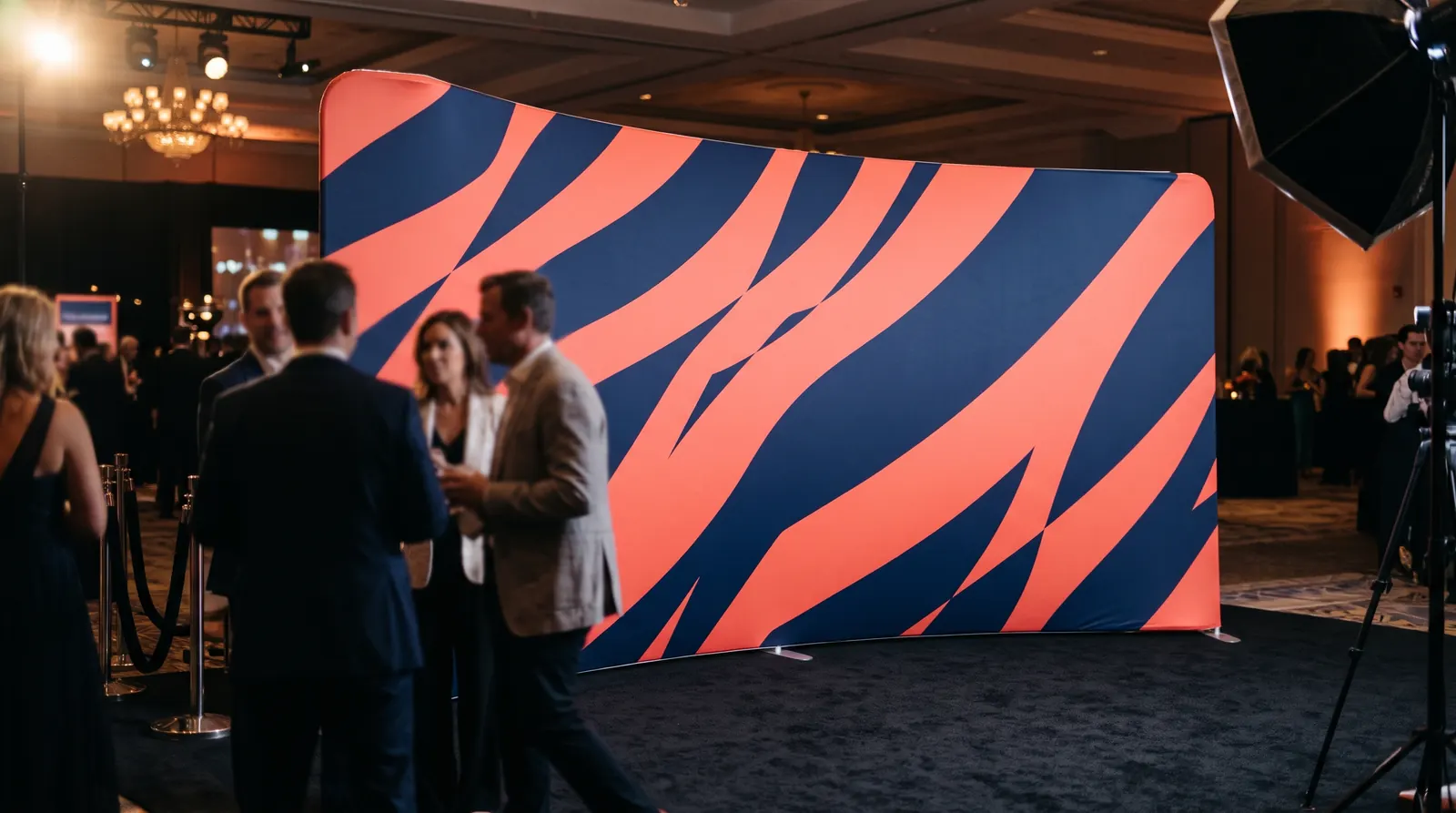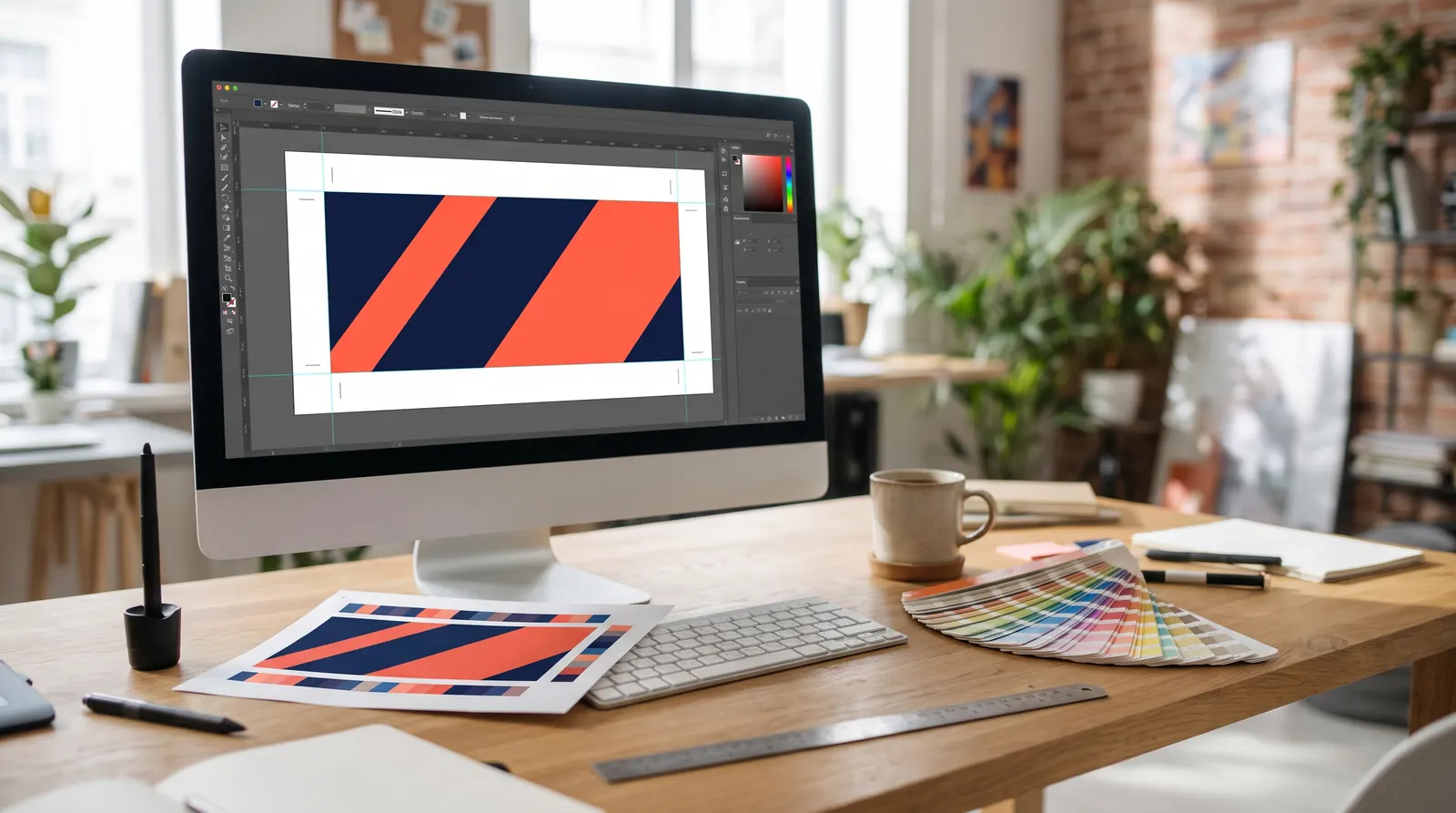
Large-format print materials in one table
Choose a print material for the display system the graphic will go into, for the lighting and for the location. The same design printed on the wrong substrate can show through, ripple, crease in transit or fail a venue's fire safety rules. The table below lists the most common materials and what they are typically used for.
| Material | Typical use | Indoor or outdoor | Key feature |
|---|---|---|---|
| Blockout | roller banners, indoor banners, banner walls | mainly indoor | opaque core, no show-through |
| Blackback | large front-lit backdrops, stages, stand builds | indoor | black reverse blocks show-through |
| Backlit | light boxes, LED walls and frames | indoor, outdoor light boxes | lets light through so the graphic glows |
| Polyester fabric | fabric walls, SEG frames, flags | indoor, outdoor (flags) | matt, no glare, can be folded |
| PVC banner (frontlit) | fences, facades, scaffolding, outdoor events | outdoor | durable, welded hems, eyelets |
| Mesh | large formats on buildings and scaffolding | outdoor | perforation lets some wind through |
| Poster paper, blueback | posters in frames and A-boards, billboards | indoor, outdoor under cover or short term | low price, short life |
| Self-adhesive vinyl | windows, walls, counters, vehicles, floors | indoor and outdoor | applies to smooth surfaces |
Blockout: the standard for roller banners
Blockout is a banner material with an opaque layer at its core. Light from behind the stand, such as a window or a spotlight, does not shine through the graphic, so the print stays readable and the colours stay even. That makes it the go-to material for roller banners, indoor banners and lightweight display systems.
We stock two 330 g/m² lines: Blockout Standard 330 g for everyday graphic production and Blockout Premium 330 g. Both come on 50 m rolls in four widths that match common pull up banner formats.
| Roll width | For roller banner graphics up to | Roll area |
|---|---|---|
| 0.914 m | 85 cm wide | 45.7 m² |
| 1.07 m | 100 cm wide | 53.5 m² |
| 1.27 m | 120 cm wide | 63.5 m² |
| 1.52 m | 150 cm wide | 76 m² |
Match the roll width to the print format and the working width of your machine. You need a few centimetres spare at the sides for bleed and media handling, and a wider roll lets you print larger formats without joining panels.
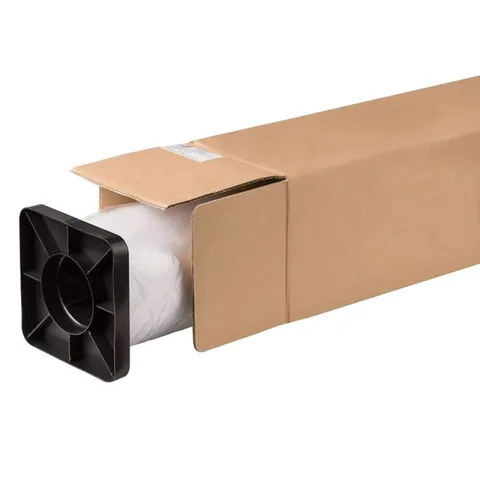
Blockout Standard 330g
from €102.94 incl. VAT4 versions
In stock — ships in 1–2 business days
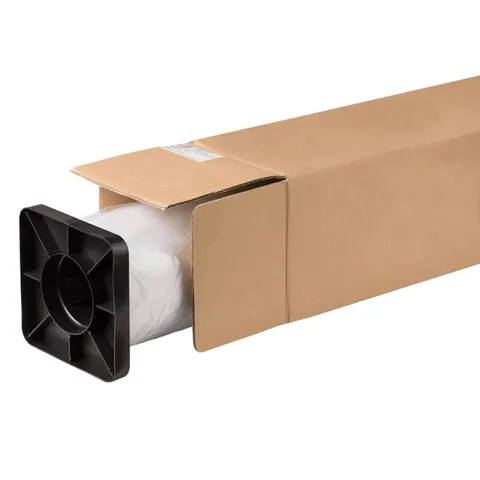
Blockout Premium 330g
from €120.69 incl. VAT4 versions
In stock — ships in 1–2 business days
Blockout Premium B1 FR (flame-retardant) 330 g width 0,914 m
€193.76 incl. VATIn stock — ships in 1–2 business days
PVC-free Blockout 260 g
from €155.40 incl. VAT2 versions
In stock — ships in 1–2 business days
Flame-retardant and PVC-free blockout
Flame-retardant materials (B1 FR)
Exhibition centres, shopping centres, hotels and public buildings often require flame-retardant materials. The B1 marking refers to the classification under the German standard DIN 4102-1, and you will also see classes under EN 13501-1 in venue documents. Before ordering a print, check the venue's rules and whether a material certificate is needed.
Flame-retardant 330 g/m² blockout comes in 0.914 m, 1.07 m and 1.27 m widths. The Blockout Premium B1 FR 0.914 m suits roller banner graphics up to 85 cm wide, with the wider rolls for larger formats.
PVC-free blockout
PVC-free Blockout 260 g is an alternative for brands that limit PVC in their materials. It is lighter than standard 330 g/m² blockout and comes in 0.914 m and 1.07 m widths, so it covers 85 and 100 cm roller banners. It works well for indoor displays at conferences, in offices, schools and public institutions.
Backlit and blackback: light behind the graphic or in front of it
The choice between these materials comes down to where the light comes from.
- Backlit — lets light through, so it is used in light boxes, frames and walls with LED illumination. We stock backlit 180 g and the heavier backlit 270 g, both on 1.6 m and 3.2 m rolls. A 1.6 m roll covers light boxes and frames, while 3.2 m lets you print a large illuminated wall in one piece, with no joins.
- Blackback — has a black reverse layer that blocks light, so anything behind the graphic, such as the frame or a hall wall, does not show through. It is the material for large front-lit backdrops: display walls, stage sets and exhibition stand builds. Blackback 260 g comes on a 3.2 m roll.
Prepare backlit artwork with illumination in mind, because light changes how colour and contrast read. Tell your printer the print is going into a light box or LED wall. You will find illuminated stands and frames in our banner stands, and more about this type of display in our guide to LED light boxes.
Fabric and keder: fabric walls and SEG frames
Polyester fabrics are the basis of modern exhibition display systems. They are matt, do not reflect spotlights and can be folded for transport once removed from the frame. They are most often printed by dye sublimation, which gives deep colours, or with other digital methods designed for textiles.
How the graphic is fitted depends on the system:
- Sleeve — on tube-frame walls such as the Atlantis straight display wall, the fabric graphic is pulled over the frame like a fitted cover.
- Keder (SEG) — for frames and walls with a groove, a silicone strip is sewn to the edge of the graphic and pressed into the profile. Our keder tape comes in 10×3, 12×3 and 14×3 mm sections on 50 and 200 m rolls. The 10×3 mm section matches, for example, the MEGA SEG display wall, while 12×3 mm suits the LUNIX, LED BOX PLUS, LED BOX PRO and BACKLIGHT systems.
- Pole pockets and hems — feather flags have a pocket for the pole, and fabric banners can have hemmed edges with eyelets.
Always check the keder section in the specification of the frame you are printing for. Keder that is too thick will not go into the groove, while keder that is too thin can pull out once the fabric is under tension.
PVC banner, mesh, paper and vinyl: outdoor and short campaigns
- PVC banner (frontlit) — a tough material for fences, facades and scaffolding. Edges are welded or hemmed, and eyelets are usually fitted every 30–50 cm. Roller banners use blockout instead, as it works better on the roller in the base.
- Mesh — a perforated material for large formats on buildings and scaffolding. The holes let some wind through, so the structure carries less load than with a solid banner. The design needs large, simple elements.
- Poster paper — the lowest-priced option for posters in frames, cases and A-boards, where a clear cover usually protects it. Choose the A or B size to suit the frame.
- Blueback paper — paper with a blue reverse that hides the previous poster. It is used on billboards and advertising columns.
- Self-adhesive vinyl — for windows, walls, counters and vehicles. Perforated one way vision film is used on glass people need to see through, and floor graphics are protected with an anti-slip laminate.
Every material behaves differently in the wind, and the load depends on the surface area and the fixing method. For outdoor installation, follow the system's instructions and your printer's advice.
Choosing a material: 6 questions before you order a print
- Which system will the graphic go into? — a roller banner needs blockout, a keder frame needs fabric with keder, a light box needs backlit. The system also sets the graphic size shown on the product page.
- Indoors or outdoors? — outside, resistance to rain, sun and wind matters; inside, no glare and a clean finish.
- Where does the light come from? — from behind and meant to shine through: backlit; from behind but must not show through: blockout or blackback.
- Does the venue require flame-retardant materials? — check the exhibition or venue rules before ordering the print.
- How will the graphic travel? — fabric folds, blockout stays in the roller banner base, and PVC banner rolls onto a tube.
- How long does it need to last? — a lower-priced substrate is fine for a one-day promotion; choose something more durable for a permanent display.
Material, artwork and colour
The same file looks slightly different on each substrate. Fabric softens fine detail, backlit looks brighter and more saturated once lit, and gloss paper gives a different impression from matt. When you prepare artwork, tell the printer the material and the lighting, and order a test print for critical brand colours. See our guides to CMYK, RGB and Pantone in print and roller banner artwork, and for the difference between systems read fabric wall or pop up stand.
Ordering materials or a print
Print shops and agencies will find rolls of blockout, backlit and blackback, plus keder tape, in our print materials category. Blockout Standard 330 g on rolls starts from €102.94 incl. VAT, and a business account shows you B2B prices. The display systems you print for are in our roller banners and display walls.
You can ask us about printing the graphic in a quote request or have it printed by any print shop. Every product page lists the graphic size. For several rolls, a pallet of material or regular deliveries, send a quote request. In-stock products ship within 1–3 working days with a VAT invoice.
Frequently asked questions
What material is best for a roller banner?
Roller banners are mainly printed on blockout, a material with an opaque layer that stops light from behind the stand showing through. A common weight is 330 g/m². If the venue requires flame-retardant materials, choose blockout marked B1 FR, and if your brand limits PVC, choose the PVC-free version. Match the roll width to the banner: 0.914 m for 85 cm and 1.07 m for 100 cm.
What is the difference between blockout and backlit?
Blockout does not let light through: its opaque layer keeps the graphic readable even with a window or spotlight behind the stand. Backlit works the other way round, letting light pass through, and is designed for graphics lit from behind, such as in light boxes and LED walls. Blockout cannot be backlit, and backlit material without illumination looks paler and may show through.
What is blackback material?
Blackback is a material with a black reverse layer that blocks light, so nothing behind the graphic shows through. It is used for large front-lit graphics such as stage backdrops, display walls and exhibition stand builds. A 3.2 m wide roll lets you print a large format in one piece. For graphics lit from behind, choose a backlit material instead.
Which material should I use for outdoor printing?
Fences, facades and scaffolding usually take PVC banner (frontlit) with welded hems and eyelets, while very large formats use mesh, which lets some of the wind through. Flags are printed on polyester fabric. Posters in A-boards and outdoor display cases can be paper if a cover protects them. Choose the fixing method according to the system's instructions.
What is keder used for?
Keder is a silicone strip sewn to the edge of a fabric graphic. It is pressed into the groove of a frame or wall profile, so the fabric is evenly tensioned and the edge is hidden. The section must match the system, for example 10×3 mm for the MEGA SEG display wall and 12×3 mm for the LUNIX, LED BOX PLUS, LED BOX PRO and BACKLIGHT systems. We sell keder tape on 50 and 200 m rolls.