Which door sign works best in an office
A door sign answers one question: what is behind this door and who will you find there. In offices, clinics, schools and public buildings, door signs with a replaceable insert are the practical choice. You print the text on an ordinary office printer, place it behind the clear window and change it in minutes when someone moves to another room.
Four things matter when you choose: the size (how much text has to fit), the frame material, the fixing method and how well the sign matches the rest of the building's signage. Below you will find a comparison of models, advice on tape and screw fixing, the mounting height commonly used next to doors and tips on laying out text that can be read from the corridor.
Door sign sizes: models compared
Door signs come in two groups of sizes. The first is the ISO 216 paper sizes: A6 (105×148 mm), A5 (148×210 mm) and A4 (210×297 mm). You can set up an insert in any word processor by choosing a standard page size. The second group is landscape and square formats designed around a room number and a few lines of text.
| Model | Sizes | Typical use |
|---|---|---|
| PURO | 180×50, 180×70, 210×90 mm | room number and name, 1–3 names |
| GERT | 149×64, 149×105.5, 149×148.5 mm | offices, consulting rooms, pictogram with a label |
| MANTA | A6, A5, A4 | meeting rooms, workshops, opening hours |
| Sonic | A6, A5, A4 | offices, workshops, training rooms |
| Elite | A6, A5, A4 | conference rooms, consulting rooms, schedules |
| Elite 148×148 mm | 148×148 mm | toilets, kitchen, archive, server room |
Material matters where signs see heavy use. MANTA is made of ABS plastic, GERT combines an ABS frame with a polystyrene window, and PURO has an aluminium frame with an acrylic window that sits well alongside other aluminium fittings. The simplest door signs are available from €3.43 incl. VAT, and models with an aluminium frame from €4.34 incl. VAT.
Slim landscape formats
The 149×64 mm and 180×50 mm formats hold a room number and one, or at most two, lines of text. They suit long office corridors where room occupants rarely change and the signs should stay discreet.
Medium formats
180×70 mm, 210×90 mm, 149×105.5 mm and A6 are the most common choice for office rooms. They fit a number, a department name and two to four names, or opening hours.
A5, A4 and square
A5 and A4 work well for conference rooms (booking schedule), classrooms (timetable) and consulting rooms (hours, duty rota). A 148×148 mm or 149×148.5 mm square suits a pictogram with a short label: toilets, kitchen, storeroom.
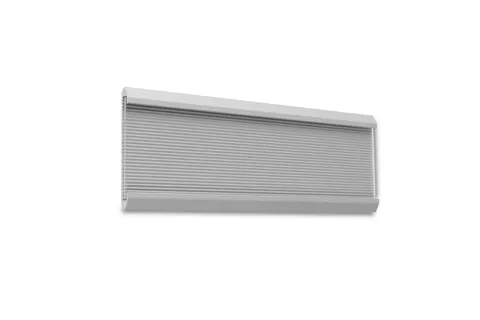
Sign plate PURO
from €4.34 incl. VAT3 versions
In stock — ships in 1–2 business days
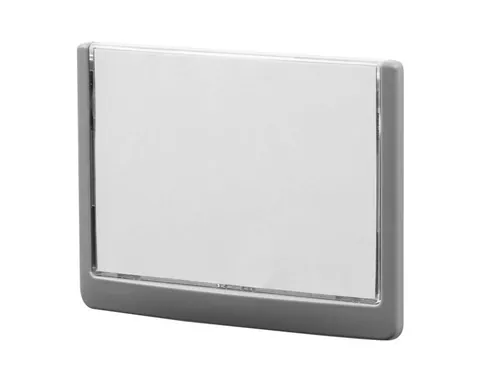
Sign plate GERT
from €6.37 incl. VAT3 versions
In stock — ships in 1–2 business days

Manta sign plate
from €3.43 incl. VAT3 versions
In stock — ships in 1–2 business days
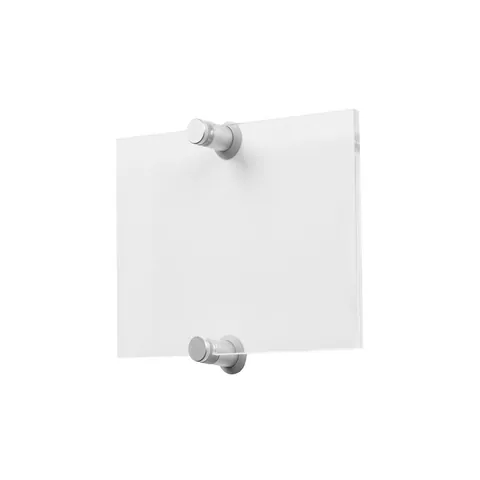
Sign plate Elite
from €15.55 incl. VAT3 versions
In stock — ships in 1–2 business days
Replaceable inserts: update signs without replacing them
In models with a frame and a window, such as GERT and PURO, the information is a printout held behind a clear cover. When the people in a room change, you print a new insert rather than ordering a new sign. Check the product page of the chosen model for the exact insert size and how the sign opens.
A few rules that keep inserts looking tidy:
- One template for the whole building — set up a file with the insert size, a fixed typeface and a set position for the room number. Each new sign is then just a matter of filling in the text.
- Clearance at the edges — keep a few millimetres free around the edge, as the frame can cover the outermost letters.
- Heavier, matt paper — paper heavier than standard 80 gsm office paper lies flat behind the window, and a matt finish reduces glare.
- Print in batches — print inserts for a whole floor at once and cut them on a guillotine so they are all exactly the same size.
Fixing a door sign: double-sided tape or screws
Door signs are usually fixed with tape or with screws. The choice depends on the surface and on whether you are allowed to drill the wall or the door. Check on the product page whether the model has fixing holes and what comes in the box.
Double-sided tape
Mounting tape works on smooth, clean and dry surfaces: painted or lacquered doors, laminate, glass, tiles and smooth painted walls. It leaves no holes, which matters in a rented office. Degrease the surface first, press the sign firmly for a dozen seconds or so and do not load it straight away. Tapes reach full adhesion only after some time, so follow the instructions on the tape packaging.
Screws
Choose screws on textured plaster, wallpaper and bare wood, and wherever a sign may be knocked or pulled off, for example in schools or busy corridors. In plasterboard, use plugs designed for plasterboard. Before drilling, check that there are no cables in the wall.
Glass doors and fire doors
On glass doors and glass partitions, use tape. Do not drill into fire-rated doors without the building manager's consent, as altering the door leaf may affect its performance. The simplest option is to fix the sign to the wall next to the door.
What height should a door sign be?
A widely used practice in interior signage is to fix the sign to the wall on the handle side, a few to around fifteen centimetres from the door frame, so that the centre of the sign sits roughly 140–160 cm above the floor. At that height the sign is at eye level for a standing person and is not hidden by the open door.
Consistency matters most: every sign on a floor should hang at the same height and on the same side of the door. Decide the height once and mark it at every door with a laser level, or with a spirit level and a tape measure. If the building has its own signage standard or accessibility guidance, follow that instead.
Fixing the sign to the door leaf makes sense when there is no wall space next to the door, for example beside glazing. Remember that once the door is open, the sign disappears from view for people in the corridor.
Readability and contrast: laying out the text
People read door signs on the move, usually from one or two metres away. The text therefore needs a clear hierarchy and strong contrast.
- Room number largest — it is read first, so it can be two to three times larger than the names.
- Simple sans-serif typeface — avoid thin, decorative and italic fonts. Write long names in sentence case rather than in capitals.
- Strong contrast — dark text on a light background or light on dark. Grey text on silver or red on black loses legibility in poor light.
- Little text — two or three lines on a slim sign, five or six at most on A6. Move the rest to a directory board at the entrance.
- One numbering scheme — floor and room number (for example 2.14) matching the building plan and the list at reception.
Signs for a whole building: one system, bulk orders
With a dozen or more rooms, start with a spreadsheet: number, room name, people, chosen format. Count the signs in each format and add a few spares for new rooms and damage. Choose one model and one colour for the whole site, and change the format only where the content requires it, for example at conference rooms.
Door signs are just one part of the system. You can mount the reception logo on stand-offs, display the floor plan and department list in poster frames, and our guide snap frame or clip frame explains the difference between frame types. For the full list of elements, see office signage step by step.
Logistics count on larger orders. Door signs are packed in bulk cartons, for example MANTA in A6 at 240 pieces and PURO 180×50 mm at 192 pieces per carton. For companies, agencies and wholesale buyers we offer a business account with B2B prices and VAT invoices.
Mistakes to avoid
- A sign on a door that opens into the corridor — nobody sees it once the door is open.
- Different heights along one corridor — even a few centimetres of difference looks careless.
- Tape on dusty plaster — without degreasing, and on a rough surface, a sign can fall off within days.
- Inserts on thin paper — they ripple behind the window and soon lose their shape.
How to order door signs
Choose a model in the door signs category and select the format or size on the product page. We ship stock items within 1–3 working days, with fast delivery across the EU and a VAT invoice. You can ask us about printing the inserts in a quote request, or have them printed by any print shop.
Planning signage for a whole building, several branches or an agency client? Send a quote request with the list of formats and quantities, and we will prepare a quotation.
Frequently asked questions
What height should a door sign be mounted at?
Most often on the wall on the handle side of the door, with the centre of the sign roughly 140–160 cm above the floor and a few to around fifteen centimetres from the frame. This is common practice rather than a regulation, so if the building has its own signage standard or accessibility guidance, follow that. What matters most is that every sign on a floor hangs at the same height and on the same side.
Should I stick or screw a door sign?
On smooth, clean surfaces such as painted doors, glass, laminate or tiles, double-sided mounting tape is enough. It leaves no holes, so it suits rented offices. On textured plaster, wallpaper and anywhere a sign may get knocked, screws with plugs suited to the wall are more secure. Do not drill into fire doors without the building manager's consent.
How do I change the insert in a door sign?
In signs with a frame and a window, the insert is an ordinary printout. Set it up in a template matching the insert size given on the product page, print it on heavier matt paper and trim it neatly on a guillotine. Then open the sign in the way intended for that model, remove the old insert and put in the new one. The sign lasts for years; only the printout changes.
Which door sign size suits an office room?
For a typical room with a number, department name and a few names, a medium format is usually enough: 180×70 mm, 210×90 mm, 149×105.5 mm or A6. Slim strips of 149×64 mm or 180×50 mm hold a number and a single line of text. Keep A5 and A4 for conference rooms and consulting rooms where you display a schedule or opening hours.
Can I order door signs for a whole building at B2B prices?
Yes. Companies, agencies and wholesale buyers can open a business account with B2B prices and VAT invoices. Door signs are packed in bulk cartons, which makes larger deliveries easy to plan. If you are signing several floors or branches, send a quote request with the list of formats and quantities, and we will prepare a quotation.