
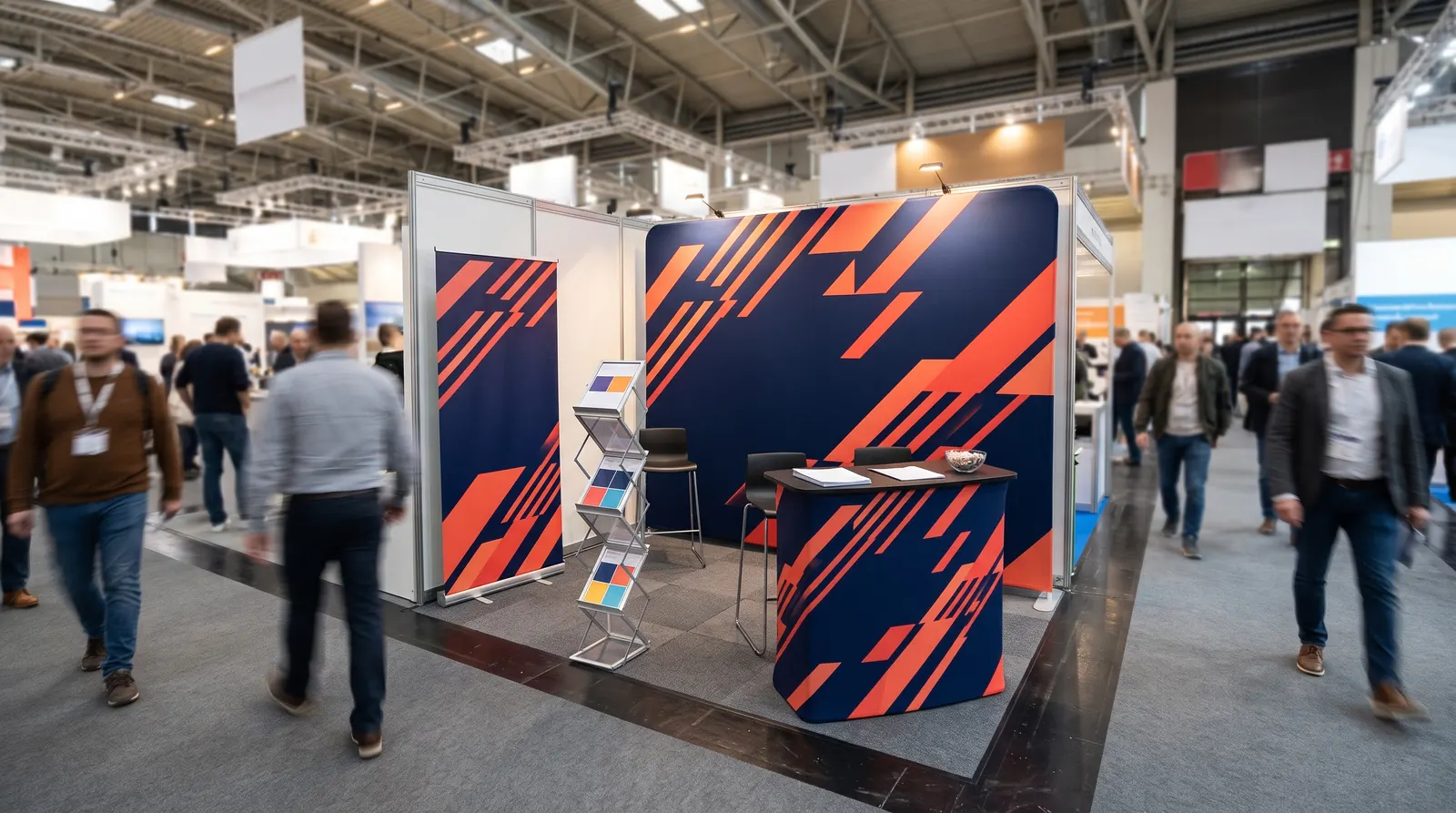
Trade show follow-up: the plan for the first days
What should you do after a trade show so that conversations on the stand turn into orders? Act fast and follow a plan. The people you spoke to remember your stand for a few days, then go back to their day-to-day work and to offers from other exhibitors.
- Day 0–1 — enter every lead into one system, complete the notes and rate each contact.
- Day 2 — send the first messages, each referring to a specific conversation.
- Days 3–7 — call hot leads, book meetings and send proposals.
- Days 14–30 — a second touchpoint with warm leads and reminders about proposals.
- Day 90 — the debrief: how many leads became orders and whether to return to the show.
The plan only works if leads were recorded properly on the stand. So we start with what you need to prepare before you travel.
How to capture leads on the stand so follow-up makes sense
A business card only tells you the person's name. To write a relevant message after the show, you need the context of the conversation. Agree one way of recording leads for the whole team and practise it before the show, as described in our trade show checklist.
What to record for every lead
- name, company, job title and contact details,
- the need or problem you discussed,
- products they were interested in, and quantities if mentioned,
- when they need a solution,
- who makes the buying decision and whether this person has a say,
- the agreed next step, such as a proposal, a sample or a call,
- a rating: hot, warm or cold,
- the team member who held the conversation.
Tools for capturing leads
A form on a phone or tablet with the same fields for everyone is enough. A paper lead card stapled to the business card also works. Put an A5 Crystal acrylic stand on the counter with a QR code to your form so visitors can leave their own details. On a small stand the Concord 2-in-1 counter and leaflet stand works well: conversation, literature and lead capture all happen in one place.
Every evening, copy or sync the day's leads. After three days at a show, reconstructing conversations from memory is close to impossible.
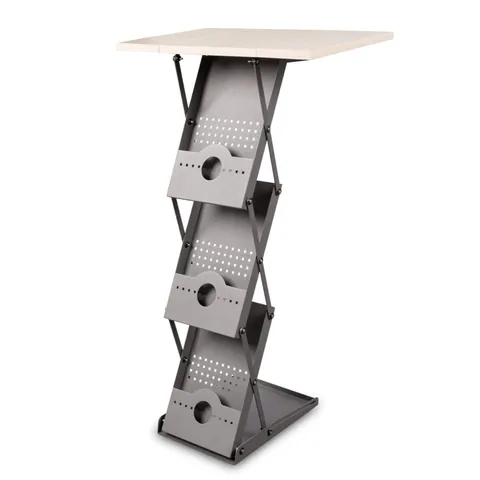
2-in-1 counter and leaflet stand- Concord
€190.00 incl. VATIn stock — ships in 1–2 business days
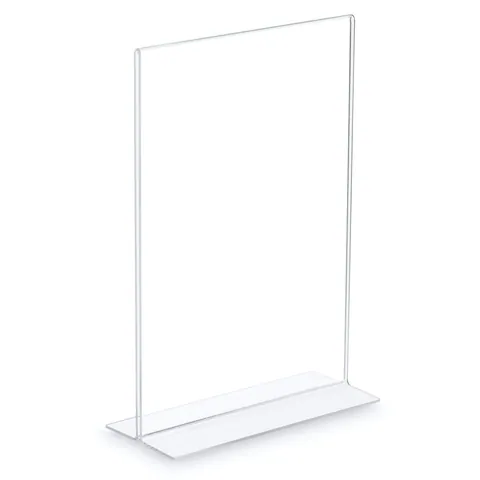
Crystal stand
from €2.39 incl. VAT3 versions
In stock — ships in 1–2 business days
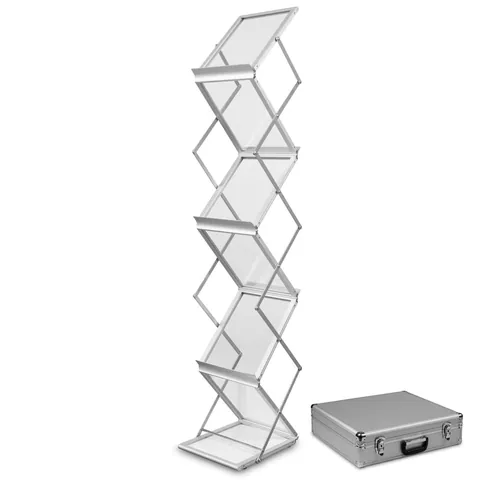
Leaflet stand Montana with case
from €140.24 incl. VAT4 versions
In stock — ships in 1–2 business days
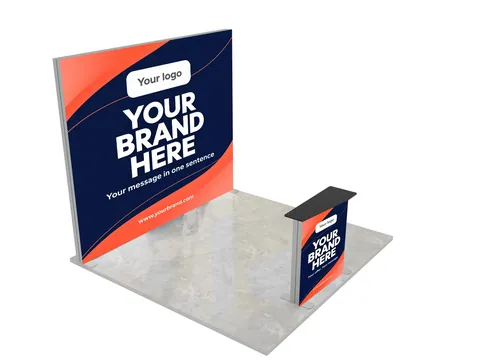
Exhibition stand using LUNIX 9 m² (3x3) peninsula layout
Request a quoteRequest a quote
Qualifying trade show leads: hot, warm and cold
Not every lead deserves the same attention. Splitting them into three groups lets your sales team start with the conversations most likely to become orders soon.
| Rating | How to recognise it | What to do | When |
|---|---|---|---|
| Hot | A specific need, a timescale, influence over the decision | Call, meeting, proposal | Contact within 48 h, proposal within 7 days |
| Warm | Interest, but no timescale or decision-maker yet | Materials and an offer of a call | Message within 48 h, second touch after 2 weeks |
| Cold | General curiosity, no need right now | A thank-you and, with consent, the newsletter | Message within a week |
Flag contacts who are not customers separately: potential partners, distributors, suppliers and press. Each group needs a different message and a different person on your side.
The trade show follow-up email within 48 hours
The first message should recall the conversation, deliver what you promised and suggest one next step. It comes from the person who spoke to the visitor on the stand, not from a general company address.
- Subject line — mention the show and the topic you discussed, not “Our company offer”.
- Opening line — something specific from the conversation: a product, a problem or a question they asked.
- Promised materials — a catalogue, price list, product sheet or project photos.
- One next step — a suggested time for a call, or a question about the details you need for a proposal.
- Signature — your name, job title, direct phone number and company name, so you are easy to place.
A template to adapt:
Hello [name], thank you for stopping by our stand on [day] to talk about [topic]. As promised, here is [material] and two options that fit [requirement from the conversation]. Could we speak on [suggested time] to tailor a proposal? Best regards, [name and phone].
Call hot leads as well. A short phone call lets you pin down the need before you prepare a proposal.
What to avoid in the first message
- the same mass email to everyone you met at the show,
- heavy attachments instead of a link to an online catalogue,
- several requests at once: a meeting, a survey and referrals,
- adding people to your newsletter without their consent,
- ignoring questions the visitor asked on the stand.
If someone asked a question you could not answer at the show, the first message is the best place to answer it. It is a simple way to show that the conversation mattered to you.
The proposal: within 7 days
A proposal sent within a week of the show reaches someone who still has the topic on their to-do list. Base it on your notes and the phone call, not on a general price list.
- a short summary of the customer's need, in their words,
- the proposed solution with two or three options,
- price, lead time and delivery terms,
- how long the proposal is valid,
- one clear next step and a named contact.
Two or three days after sending, call and ask whether the proposal meets the need. That is a good moment to clear up doubts and agree a decision date. If the customer needs sign-off from a manager, offer a short summary they can pass on, or a joint call with the decision-maker.
A 90-day follow-up schedule after the show
| When | Hot | Warm | Cold |
|---|---|---|---|
| Day 1 | Logged, rated, assigned | Logged, rated | Logged |
| Day 2 | Email and phone call | Email with materials | — |
| Day 7 | Proposal sent | — | Thank-you for visiting |
| Day 14 | Call about the proposal | Second touch, offer of a call | — |
| Day 30 | Decision or new date | Reminder, new material | Newsletter if consent given |
| Day 90 | Results reviewed | Lead re-rated | Lead re-rated |
Put these dates into your sales team's calendars straight after the show. Leads without an owner and a date are the ones that get lost. Once a week, review with the team where each show conversation stands.
How to measure trade show results
After 90 days, put the figures in one table: leads in each rating, meetings booked, proposals sent, orders and their value. Add up all the spend for the show and divide it by the number of qualified leads. How to break down the budget is covered in our guide to exhibition stand cost.
Collect the team's observations too: which questions came up most, what was missing on the stand and what drew visitors in. Those lessons feed straight into the next show. Typical problems and how to avoid them are in our guide to common trade show mistakes.
After the show: get your kit ready for the next event
Before you put the stand into storage, check every part, clean the graphics and note what was missing or worn. How to pack and store kit between events is covered in our guide to transport and storage.
Some of the equipment can keep working between shows. A Montana leaflet stand or a Boston leaflet stand fits a reception area or showroom, and a Standard roller banner with your show graphic reminds visitors to your office of the new offer. If your next show is on a bigger space, consider a ready-made LUNIX stand, which assembles without tools.
What next: kit for your next show
Complete stand kits are in ready-made exhibition stands, and stands for reception and the booth are in brochure stands. Products in stock ship within 1–3 working days across the EU, with a VAT invoice, and companies with a business account buy at B2B prices.
If you are planning several events a year and want kit that fits different space sizes, send a quote request.
Frequently asked questions
When should you follow up trade show leads?
Send the first message within 48 hours of the show. At that point the contact still remembers your stand and the conversation, and their inbox is not yet full of offers from other exhibitors. Call hot leads as well and get a proposal to them within 7 days. Plan a second touchpoint with warm leads after about two weeks.
How do you write a follow-up email after a trade show?
Open with something specific from the conversation: a product, a problem or a question raised on the stand. Attach the materials you promised and suggest one next step, such as a time for a short call. Mention the show and the topic in the subject line. The email should come from the person who spoke to the visitor, with their name and direct phone number in the signature.
How do you tell which trade show leads are worth pursuing?
A lead is hot when the person has a specific need, a timescale and influence over the buying decision. A warm lead shows interest but has no timescale, or someone else decides. A cold lead is general curiosity with no need right now. Record the rating on the stand straight after the conversation, because it is hard to reconstruct a few days later.
How do you know if a trade show was worth it?
After about 90 days, compare all the show spend with the results: qualified leads, meetings, proposals, orders and their value. Divide the spend by the number of qualified leads and compare the figure with other ways you win customers. Record this after every show so you know which events to repeat.