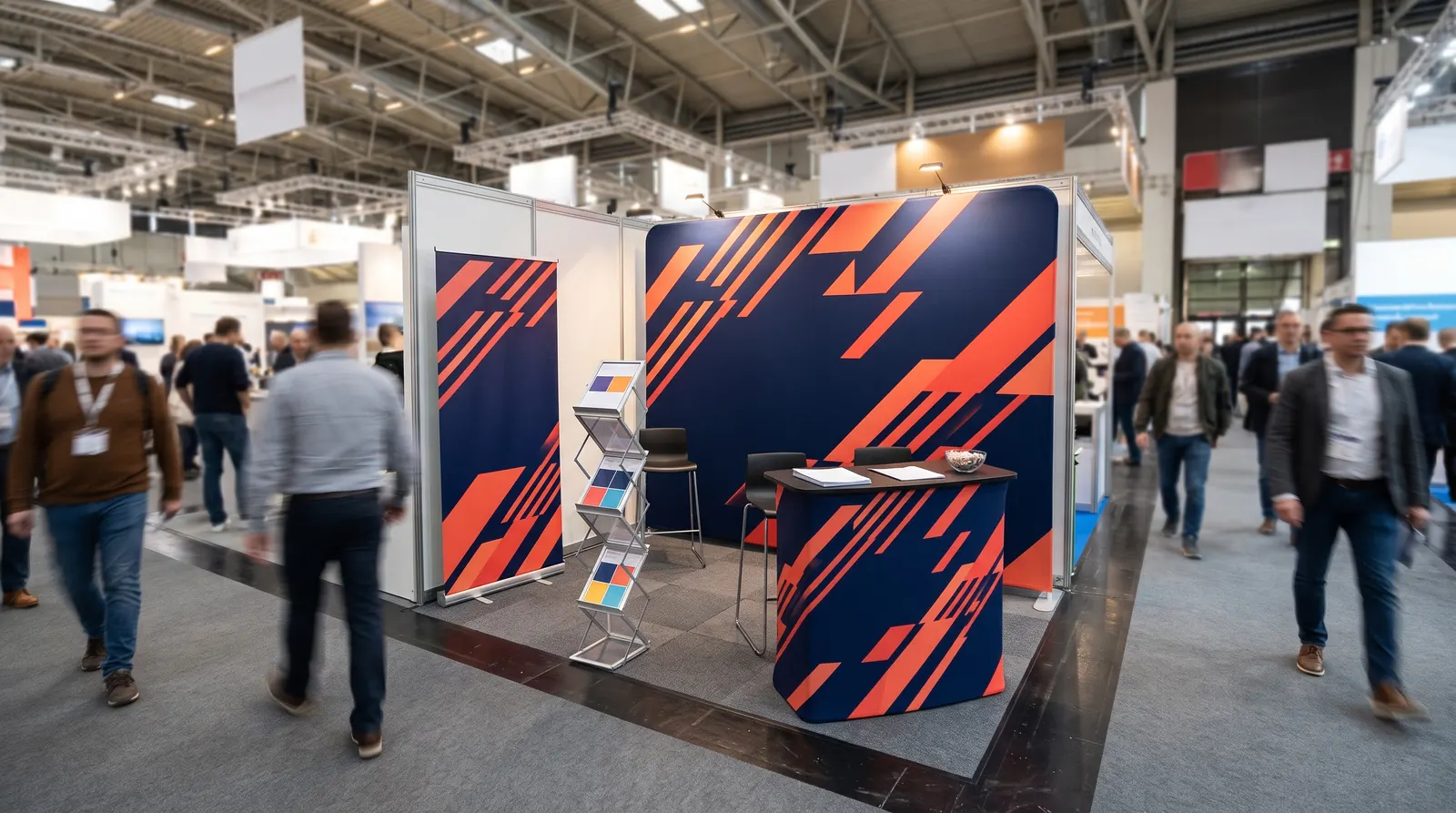
Trade show mistakes that cost the most
Most trade show mistakes have nothing to do with a small budget and everything to do with a missing plan. A smart stand with an unprepared team will bring back less than a modest booth staffed by people who know who to talk to and what to say.
We have grouped 20 exhibitor mistakes into six areas: before the show, stand design, staffing, collecting leads, logistics and after the show. Each one comes with a simple fix, and there is a cheat sheet table at the end. Go through the list with your team at the pre-show meeting and agree who owns each point so the mistake is not repeated.
Mistakes before the show: 4 errors
The most expensive mistakes are made before anyone walks into the venue. At this stage every decision is still cheap to change, so give it the most attention.
- No measurable goal — “raising our profile” is not a goal. Write down how many conversations, meetings and enquiries you want, and check the result after the show.
- Leaving it to the last minute — without slack, artwork is rushed and kit is ordered without comparing options. Start at least 12 weeks out, following the plan in our trade show checklist.
- Not reading the exhibitor manual — build height limits, material requirements, build-up times and power rules can catch you out on arrival day. Read the manual before you order the stand, and note the deadlines for utilities and catalogue entries.
- No invitations to customers — waiting for people to find your stand by chance wastes the chance to meet those who already know you. Send invitations with your stand number a few weeks ahead and book meetings for specific times.
Exhibition stand design mistakes: 5 errors
Stand design has one job: to stop the right person and make it easy for them to step in. These mistakes make visitors walk past, even when your offer would interest them.
- Artwork made by guesswork — every system has its own graphic size with bleed. The 3x3 label on a pop up stand refers to frame panels, not metres: the straight pop up display with case opens to 274×230 cm. Design only once you have chosen the model, and take the size from the product page.
- Too much text — a list of every service in small type will not be read from the aisle. One headline, the logo, an image and contact details are enough. More rules are in our guide to roller banner design rules.
- Key content at the bottom — the lower part of the wall is hidden by the counter and people. Counters are usually 90 to 103 cm tall, so keep the logo and headline in the top half.
- A counter across the entrance — it blocks the stand and looks like a barrier. Put the counter to one side or at an angle so visitors can walk in without squeezing past staff.
- A dark stand — unlit graphics lose their colour, especially in darker parts of the hall. Choose a backlit build or add an LED light for pop up displays or the 4 W LED roller banner light.
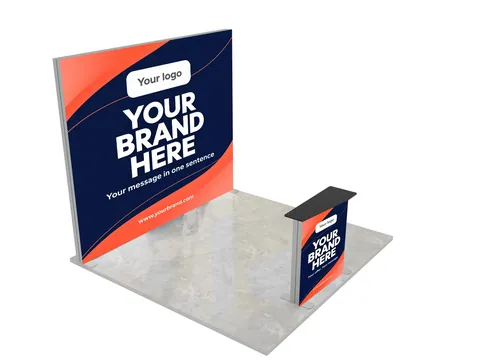
Exhibition stand using LUNIX 9 m² (3x3) peninsula layout
Request a quoteRequest a quote
- Deal of the week
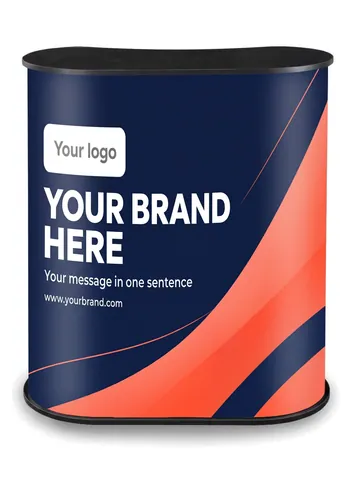
Counter Promo 2 with heavy-duty top
from €117.63€153.94incl. VATLowest price in the 30 days before the discount: €153.942 versions
In stock — ships in 1–2 business days
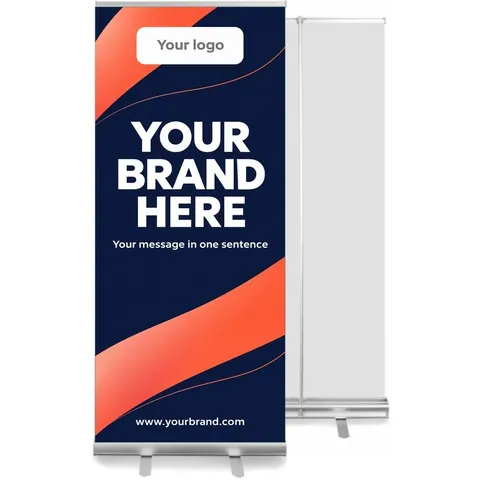
Standard roller banner – pull up stand 85–150 cm
from €26.98 incl. VAT6 versions
In stock — ships in 1–2 business days
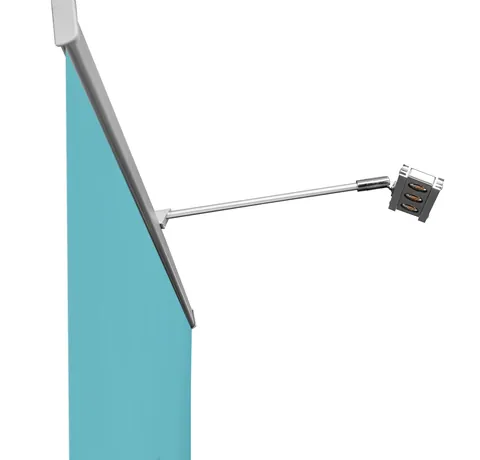
LED light for roll-ups
€68.23 incl. VATLead time on request
Booth staffing mistakes: 4 errors
It is the people on the stand who turn aisle traffic into conversations. Even the best build will not help if the team does not know how to behave or who is responsible for what.
- Sitting, phones and food — a team seated behind the counter, phones in hand, sends a clear message: do not disturb. Draw up a staff rota with breaks away from the stand so nobody has to eat behind the counter.
- Huddles of colleagues — several staff chatting to each other form a wall visitors will not break through. Decide who stands at the edge of the stand and who handles meetings.
- “Can I help you?” and no script — the easiest answer to that is “just looking, thanks”. Open with a question about the visitor's business or what they hope to find at the show, then ask three qualifying questions.
- A messy stand — boxes, coats, cups and cables on show make the booth look unprofessional. Plan a store and do a quick walk-round every morning before the hall opens.
Lead capture mistakes: 3 errors
A contact without context is almost worthless. Agree one way of recording conversations before the show, on paper or on a phone, and stick to it every day.
- Business cards without notes — after three days nobody remembers who needed what. For every lead, note the need, the timescale, the next step and a rating: hot, warm or cold.
- A competition for everyone — a big prize unrelated to your offer collects hundreds of random addresses. A prize linked to your product and two questions on the entry form attract the right people.
- No consent to contact — when collecting details, explain how you will use them and ask for consent to sales contact in line with data protection law such as GDPR. That way your follow-up surprises nobody.
Logistics mistakes: 2 errors
Logistics rarely gets attention until something goes wrong. Stress during build-up then spills over into the whole first day of the show.
- No test build — only on site do you discover a missing part or that build-up takes twice as long. Put the whole stand up in the office a week before, count the parts and photograph the layout. The photos also help whoever builds the stand at the next show.
- Kit without protection — creased graphics and scratched frames are a common result of shipping without proper packaging. The Standard roller banner comes with a transport bag, and the hard exhibition case S measures 134×43×27 cm to protect longer items. Carry heavier cases, such as a 25 kg pop up stand, with two people.
Mistakes after the show: 2 errors
Closing time is only halfway. Many companies come home tired and put leads aside for later, and later often means never.
- Late follow-up — a message sent two weeks later reaches someone who has already spoken to your competitors. Send the first message within 48 hours and a proposal to hot leads within a week.
- No debrief — without figures you do not know whether the show paid off or what to improve. Record spend, leads, meetings, proposals and orders, plus the team's notes on the stand. Those notes are the best input for planning the next event.
How to turn leads into orders step by step is covered in our guide to trade show follow-up.
Cheat sheet: mistake, effect and fix
Print this table and go through it with the team before you travel. These are the mistakes that most often decide how a show goes.
| Mistake | Effect | How to avoid it |
|---|---|---|
| No goal | No way to tell if the show paid off | Set targets for conversations, meetings and enquiries |
| Wrong artwork | Print does not fit the frame | Graphic size from the product page of your model |
| Too much text | Nobody stops at the stand | One headline in the top half of the wall |
| Blocked entrance | Visitors walk past | Counter to one side, open front |
| Team busy with itself | Fewer conversations | Staff rota and a question script |
| Leads without notes | No idea who to call | Rating and next step for every lead |
| Late follow-up | Leads go cold | First message within 48 hours |
For inspiration on a better layout, see our list of exhibition stand ideas.
How to order your trade show kit
Complete kits are in ready-made exhibition stands, roller banners in roll-up banners and counters in exhibition counters. Products in stock ship within 1–3 working days across the EU, with a VAT invoice.
You can ask us about printing in a quote request or have the graphics printed by any print shop. We list the graphic size on every product page. Send a quote request for pricing on several stands or agency rates.
Frequently asked questions
What is the most common mistake exhibitors make at trade shows?
The most common one is having no measurable goal and no plan for handling leads. The company invests in a stand but does not know how many conversations it expects, who records contacts or when to follow up. The result is a pile of business cards without notes and no answer to whether the show paid off. Start with the goal and plan everything else around it.
How should staff behave on an exhibition stand?
Stand at the edge of the booth rather than behind the counter, make eye contact with people in the aisle and open with a question about the visitor's business or needs. Do not eat on the stand, sit with your phone or huddle with colleagues. Take breaks away from the stand according to the rota, so the team stays fresh until closing.
How much text should an exhibition stand graphic have?
As little as possible: one headline, the logo, a product image and contact details. Visitors pass a stand in a few seconds, so they need to grasp what you do quickly. Place the headline in the top half of the wall, because the counter and people hide the bottom. Leave the detail for conversations, leaflets and a website reached through a QR code.
When should you follow up after a trade show?
Send the first message within 48 hours of the show, while the contact still remembers your stand and the conversation. Refer to the specific topic you discussed, attach any materials you promised and suggest one next step, such as a call. Send hot leads a proposal within a week and plan the next contact with the rest within a month.