

Flagpole installation — where to start
A fixed flagpole stands up to the wind all year round, so installing one is a building job rather than a quick set-up. A typical pole sits in a ground sleeve, a metal socket cast into a concrete foundation. The sleeve means the pole can later be lifted out for servicing or replacement.
We sell portable feather flag poles and Avenue brackets for posts. If you are installing a fixed flagpole, always follow its manufacturer's instructions. The steps below show the typical sequence of work and suggest what to ask the manufacturer or installer. Setting up a feather flag pole without a foundation is covered further down.
Not every fixed flagpole goes into the ground. A pole on a base plate anchored to an existing surface or on a wall bracket is installed to the manufacturer's instructions, with anchors chosen for the surface or wall type. An insulated facade needs different fixings from bare masonry, so this kind of installation is best left to a professional.
What to prepare before installing a fixed flagpole
- Manufacturer's documents — installation instructions, foundation requirements and the largest flag the pole can carry.
- Foundation design — the excavation size, reinforcement and type of concrete are set by the flagpole manufacturer or a designer, taking the ground on your site into account.
- Permissions — from the landowner, the building manager or the management company. Check with your local authority whether planning permission or notification is needed.
- Site information — the route of cables, pipes and drains, for example from utility records or the site manager.
- Equipment and people — a spirit level, digging and concreting equipment and at least two people to raise the pole.
Installing a flagpole in a ground sleeve, step by step
- Check permissions
Get consent from the landowner or site manager, and check with your local authority whether a fixed flagpole needs permission or notification. Gather the manufacturer's instructions and the foundation design.
- Choose and check the site
Make sure there are no cables or pipes underground and no power lines overhead. Leave access to the pole for changing the flag and carrying out inspections.
- Dig the excavation
Dig to the dimensions in the design or manufacturer's instructions. Level the bottom and remove loose soil, and talk to your installer if the ground is weak.
- Set the ground sleeve
Place the sleeve in the hole and set it plumb, checking with a spirit level in two directions. Protect the inside of the sleeve from concrete and set its top edge at the height given in the instructions.
- Pour the concrete and wait
Fill the hole with concrete and reinforcement as designed, checking that the sleeve stays plumb as you pour. Do not load the foundation until the concrete has cured for the time set out in the design.
- Prepare the pole on the ground
Assemble the pole, fit the top or rotating truck and thread the halyard before the pole goes up. Adjustments at height are difficult and dangerous.
- Set the pole in the sleeve
With at least two people, raise the pole, slide it into the sleeve and set it plumb. Lock it in place as the manufacturer describes and check that there is no play.
- Raise the flag and check
Hoist the flag and check that it turns freely without rubbing against the pole. After a few days, check the pole is still plumb and secure, then repeat inspections as the manufacturer recommends.
Flagpole foundations — why we give no dimensions
Foundation size depends on the pole height, flag size, soil type and bearing capacity, the water table, frost depth and the wind conditions on site. The same flagpole may need a different foundation on sandy ground than on firm clay. That is why we do not quote a single size that would suit every site.
Before you start digging, ask the flagpole manufacturer or installer about:
- Foundation size and reinforcement for your pole and ground.
- The type of ground sleeve and how the pole is locked into it.
- Concrete curing time before the pole can be fitted and the flag raised.
- Maximum flag size and guidance for strong wind.
- Inspection schedule needed to keep the warranty valid and the pole safe.
Common flagpole installation mistakes
- Guessing the foundation — copying dimensions from a different pole or different ground. A foundation is designed for a specific pole and site.
- A sleeve that is not plumb — even a slight lean is obvious several metres up, and hard to correct without breaking out concrete.
- Loading it too early — fitting the pole and flying a flag before the concrete has cured weakens the foundation.
- Not checking for services — a cut cable or pipe means extra repairs and a risk of electric shock.
- A flag that is too big — a flag larger than the manufacturer allows overloads the pole and foundation with every gust.
- Raising the pole alone — a long pole easily slips out of your hands. Always work with at least two people.
Setting up a feather flag pole without a foundation
For seasonal advertising, events and shop fronts you do not need concrete. A portable pole such as the Flagpole Standard is assembled from sections and set in a base that suits the surface.
- Grass and soil — screw a ground screw anchor all the way in, or drive a ground spike or Twin ground spike in vertically to its full length. Check for cables and pipes before you start.
- Paving, concrete, indoor floors — a water base filled to the top, a metal base plate or a 19 kg rubber base with rotator.
- Posts and street lamps — an Avenue banner bracket or Avenue XL bracket fixes on with a clamp with an 80 cm circumference. You need the post owner's permission, and any work at height should be done with suitable access equipment and safe working practices.
A portable pole will not replace a fixed flagpole outside your headquarters, but it has other advantages. The set fits in a car boot, moves in minutes and can be taken in overnight or in bad weather. There is also no building work and no waiting for concrete to cure.
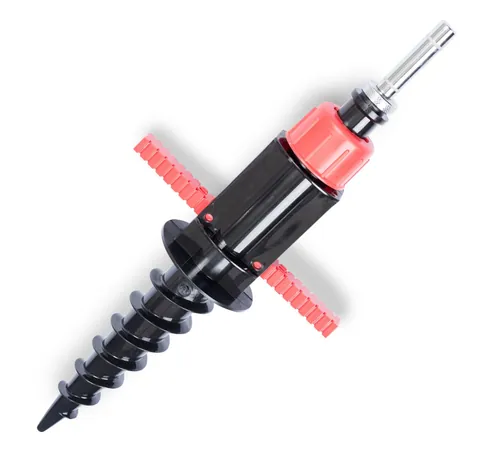
Dryl ground screw anchor
€21.68 incl. VATIn stock — ships in 1–2 business days
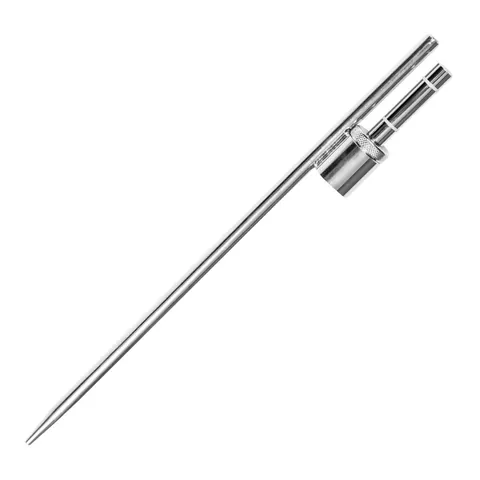
Bagnet ground spike
€15.37 incl. VATIn stock — ships in 1–2 business days
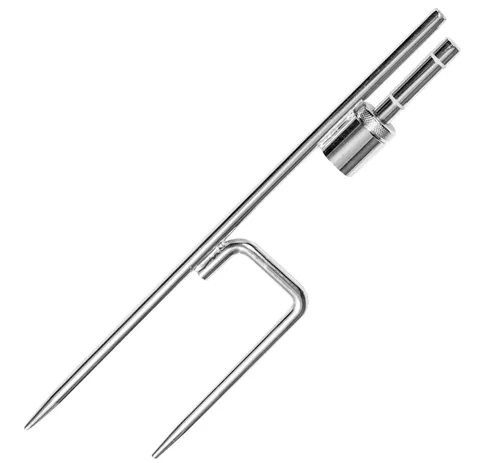
Bagnet Twin ground spike
€22.85 incl. VATIn stock — ships in 1–2 business days

Avenue single banner bracket
€72.83 incl. VATIn stock — ships in 1–2 business days
The rest of the set-up is covered in our guide on how to assemble a feather flag, and choosing a base in how to choose a flag base.
Checks and maintenance after installation
A few days after installing a fixed flagpole, check that it is plumb and secure in the sleeve. After that, inspect it regularly as the manufacturer recommends, and always after a gale.
- Rotating top and halyard — does the top turn freely, and is the halyard free of wear?
- Flag — fraying edges shorten a flag's life, so replace it before it tears.
- Foundation and sleeve — is the concrete free of cracks, and does the pole sit without play?
- Strong wind — follow the manufacturer's guidance on when to take the flag down. For feather flags, see our guide to feather flags in wind.
What next
You will find feather flag poles and Avenue brackets in our flagpoles category and bases under flag bases. For a comparison of fixed and portable poles, read how to choose a flagpole. Planning flags for several sites? Send a quote request and we will prepare a quote with B2B prices.
Frequently asked questions
How deep should a flagpole foundation be?
The depth and size of the foundation depend on the pole height, flag size, soil type, water table and frost depth. That is why there is no single figure that suits every flagpole. Take the foundation size and reinforcement from the flagpole manufacturer's instructions or from a design prepared for your site. If the manufacturer does not give them, ask before you buy or have a structural engineer design the foundation.
What is a flagpole ground sleeve for?
A ground sleeve is a metal socket set into the concrete foundation, and the bottom of the pole slides into it. The pole is not cast in permanently, so it can be lifted out for servicing, repainting or replacement while the foundation stays in place. The sleeve is set plumb before the concrete is poured and protected from concrete getting inside. The sleeve type and locking method are specified by the manufacturer.
Do I need permission to install a flagpole?
That depends on the site and local rules. You always need the landowner's consent, and on shared, leased or managed land the site manager's too. Check with your local authority whether a fixed flagpole needs planning permission or notification. Brackets on street lamps need the post owner's consent, usually the council or highway authority. A portable feather flag on private land normally needs only the owner's agreement.
How many people does it take to put up a flagpole?
Raise a fixed flagpole with at least two people: one guides the pole into the sleeve while the other supports it and keeps it plumb. For taller poles, the manufacturer may recommend more people or lifting equipment. A portable feather flag pole is usually put up by one person in a few minutes. An extra pair of hands helps with several flags at once and with driving bases into hard ground.